
Imagine waking up after a heavy Kansas storm in May 2023 only to find your backyard soil migrating toward the neighbor’s fence. For many homeowners in Shawnee and Leawood, a leaning timber wall or a patch of eroding turf isn’t just a landscaping chore; it’s a direct threat to the home’s foundation. You likely recognize that a failing wall is a liability that won’t fix itself. Finding the right retaining wall landscapers is the difference between a temporary patch and a permanent engineering solution that stands for thirty years or more.
You deserve a property that remains stable and beautiful regardless of the weather. This guide will show you how to choose a local expert who can navigate complex city permit processes and solve deep seated drainage issues. We’ll explore the technical requirements for structural integrity and the aesthetic choices that transform steep slopes into functional, flat yard space. By the end, you’ll have a clear roadmap for hiring a professional who balances rugged durability with the refined look your Johnson County home deserves.
Key Takeaways
- Understand why Johnson County’s expansive clay soil requires specialized engineering to prevent structural shifting and wall failure.
- Discover the essential “drainage-first” construction techniques, including compacted gravel bases and perforated piping, that ensure long-term stability.
- Compare the durability and aesthetic benefits of natural stone versus segmental blocks to find the ideal match for the Kansas climate.
- Learn how to spot early warning signs of distress, such as bowing or stone separation, before they lead to expensive property damage.
- Identify the qualities that define elite retaining wall landscapers who prioritize structural integrity and high-end design for your outdoor living space.
Why Retaining Wall Landscapers in Johnson County, KS Must Prioritize Engineering
A natural stone wall adds undeniable curb appeal to an Overland Park home, but its beauty is secondary to its function. Homeowners often confuse a decorative garden border with a structural wall. While a 12 inch stack of stones might stay put by gravity alone, any structure taller than 3 feet becomes a complex engineering project. Professional retaining wall landscapers understand that these installations aren’t just about aesthetics; they’re about managing thousands of pounds of moving earth. Retaining walls must be designed to withstand lateral earth pressure, especially in the volatile climate of the Midwest.
Local expertise is vital because of the strict building codes in Johnson County. In Overland Park, for instance, any wall exceeding 4 feet in height requires a building permit and a stamped plan from a structural engineer. Olathe follows similar safety protocols to protect residential property values. Experienced retaining wall landscapers navigate these municipal requirements to ensure your investment is legal, safe, and built to last for decades rather than just a few seasons. We handle the heavy lifting of compliance so you don’t have to worry about city inspectors or future structural failure.
The “Clay Factor” in Kansas City Hardscaping
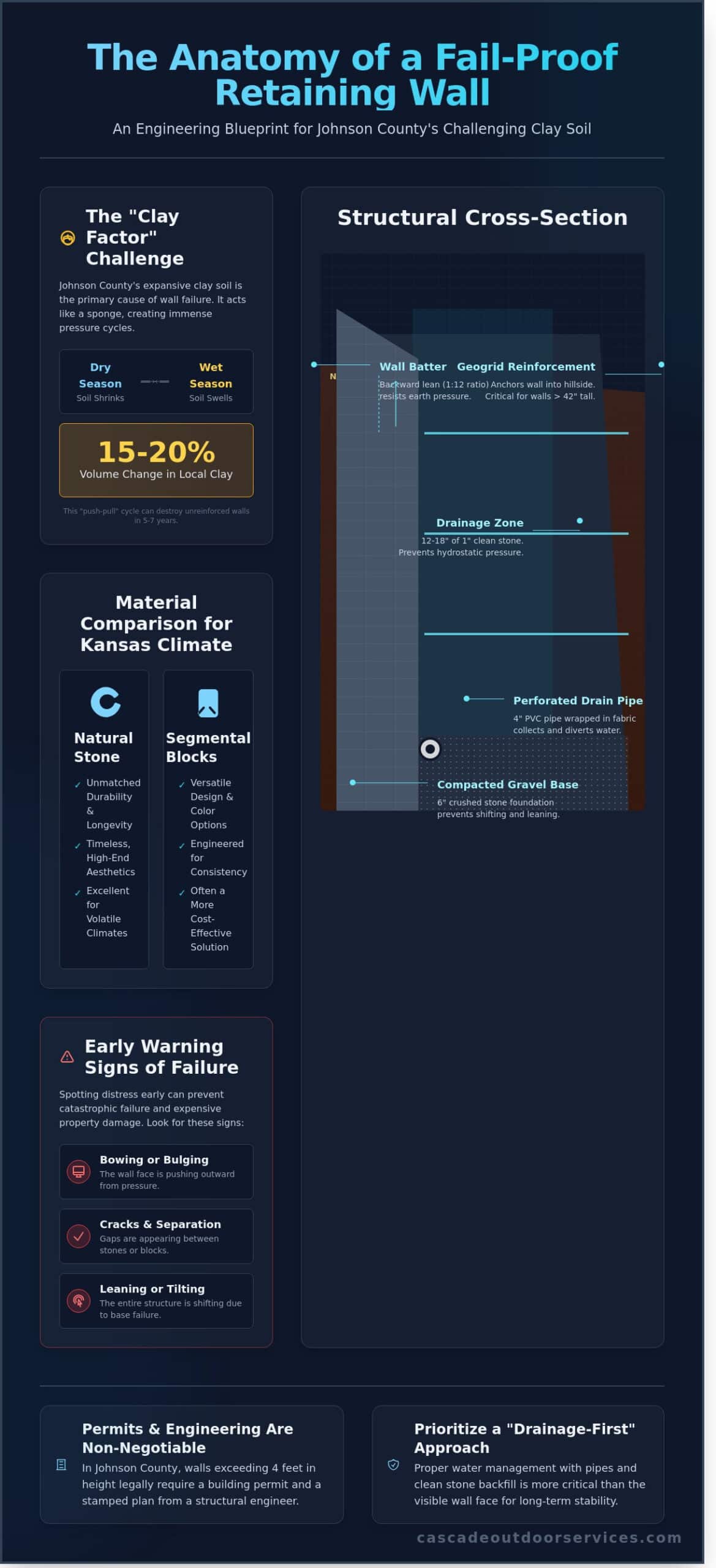
Johnson County is notorious for its heavy, expansive clay soil. This material acts like a sponge. It swells significantly when wet and shrinks during dry August heat. This constant movement creates a “push-pull” cycle that can easily snap timber walls or tilt unreinforced blocks. Standard DIY methods often ignore the 15% to 20% volume change common in local clay. Without deep footings and proper reinforcement, a wall will typically show signs of failure within 5 to 7 years. We focus on stabilizing this movement through advanced soil management and heavy duty base preparation.
Structural Integrity vs. Cosmetic Appeal
The most critical parts of your wall are the 60% of the components hidden underground. A lasting wall relies on a compacted gravel base, perforated drainage pipes, and clean backfill. We calculate the necessary “batter,” which is the slight backward lean of the wall into the slope. A standard 1:12 ratio helps the structure resist the weight of the hill. During heavy Kansas spring rains, hydrostatic pressure builds up behind the stones. If that water isn’t diverted through professional drainage solutions, the wall will eventually blow out. Our team prioritizes these invisible details to guarantee your property’s long term safety.
The Anatomy of a Durable Retaining Wall: 2026 Best Practices
Building a wall that survives Kansas winters requires more than just stacking stones. Overland Park’s heavy clay soil expands when wet, putting thousands of pounds of pressure on your hardscape. Professional retaining wall landscapers start by digging a trench at least 12 inches deep to create a stable footing. We fill this with a 6-inch layer of crushed stone, compacted to 95% Proctor density to prevent shifting. This solid base prevents the common leaning effect seen in amateur projects.
For larger residential projects, following the Caltrans guide to retaining wall design ensures that the structure handles lateral earth pressure correctly. Never use native clay for backfill. It holds water like a sponge and creates hydrostatic pressure that can snap a wall’s structural integrity. Instead, we use 12 to 18 inches of 1-inch clean drainage stone directly behind the wall face. For walls exceeding 42 inches in height, we integrate geogrid. This high-tenacity polyester mesh locks into the stone layers and extends 4 to 8 feet into the bank to anchor the wall firmly into the hillside.
The Role of French Drains and Downspout Burial
Water is the primary enemy of stone longevity. We install 4-inch perforated PVC pipes wrapped in filter fabric to collect subsurface moisture. Connecting these to catch basins or solid-wall downspout extensions is critical. By burying downspouts and directing them 10 feet past the wall’s end, we prevent the washout that undermines foundations. If you’re concerned about your property’s current drainage, you can consult with a specialist to design a system that protects your investment.
Compaction and Leveling: The Foundation of Longevity
Precision is the difference between a wall that lasts 5 years and one that lasts 50. We use 500-pound plate compactors on every 4-inch lift of gravel. If the base isn’t dense, the wall will settle unevenly within 24 months. The first course of stone is always buried at least 10% of the wall’s total height to provide toe-hold stability. We utilize laser levels to ensure a 0.5% batter, or a slight lean into the hill, which increases the structural capacity against the weight of the earth behind it. This methodical approach ensures your natural stone remains a permanent fixture of your landscape.
Comparing Retaining Wall Materials for the Kansas Climate
Choosing the right material for an Overland Park landscape requires an understanding of local geology and weather patterns. Kansas weather is notoriously hard on hardscaping. The region experiences 50 to 70 freeze-thaw cycles annually. These temperature swings cause soil to expand and contract with significant force. Professional retaining wall landscapers prioritize materials that can withstand this movement without shifting or cracking. While aesthetics matter, the structural integrity of the wall depends on how well the material manages moisture and soil pressure over several decades. If you want a deeper look at how to choose the right approach for your property, our comprehensive guide to retaining wall services near me in Johnson County covers modern drainage strategies and material selection in detail.
Natural Stone: Timeless Elegance in Overland Park
In Johnson County, natural stone remains the gold standard for high-end residential projects. Local limestone and sandstone offer a native aesthetic that blends into the suburban environment. You can choose between dry-stack and mortared installations. Dry-stacking is often the superior choice for drainage. It allows water to seep through the joints naturally, which reduces the risk of wall failure. When you evaluate retaining wall design considerations, you’ll find that flexible structures often outlast rigid ones in the Kansas climate.
Matching stone textures to your home’s architecture is essential for a cohesive look. Rough-hewn fieldstone complements traditional Kansas City brick homes, while sawn limestone provides a clean, contemporary finish. Because natural stone is a heavy, durable product, it doesn’t fade or degrade like synthetic options. It’s an investment in your property’s long-term value.
Segmental Blocks: The Modern Engineering Choice
Segmental retaining walls (SRW) use interlocking concrete units that provide exceptional strength. These systems are engineered to handle high soil pressure more efficiently than traditional methods. Most modern blocks feature a built-in batter, meaning the wall naturally leans into the hillside as it’s built. This design prevents the “toppling” effect seen in older, vertical walls. Retaining wall landscapers often recommend these for steep driveways or tiered backyard transformations because they require very little maintenance.
The color palettes for these blocks have evolved significantly. You can now find finishes that mimic weathered slate or tumbled stone, offering a 90% color match to common Kansas City siding and trim colors. Unlike wood, these blocks won’t rot, and they don’t require the specialized masonry repairs that mortared stone might need after twenty years of service.
For projects with different goals, consider these alternatives:
- Timber Walls: These are cost-effective for low-profile garden beds. However, in the 80% humidity of a Kansas July, even pressure-treated timber has a realistic lifespan of only 12 to 15 years. Homeowners replacing rotting wood structures can find detailed guidance on retaining wall installation near me in Johnson County to understand the best long-term alternatives.
- Boulder Walls: Large limestone boulders, often weighing between 500 and 1,500 pounds, create a rugged Ozark-style look. They’re perfect for stabilizing large hillsides where a formal look isn’t required.
Recognizing Signs of Retaining Wall Failure
A retaining wall does more than hold back dirt; it manages thousands of pounds of lateral earth pressure. When natural stone walls begin to fail, they rarely do so without warning. You might notice a slight “leaning” or “bowing” in the center of the wall. This usually signals poor drainage. Water weighs approximately 62.4 pounds per cubic foot. If that moisture can’t escape through gravel backfill or designated weep holes, it pushes against your stone with immense force. If your wall tilts more than 5 degrees from its original vertical position, the structural integrity is likely compromised.
- Separation between stones: Gaps exceeding 0.5 inches between blocks or natural stones indicate that the foundation is settling or the soil behind it is expanding due to frost heave.
- Efflorescence: This white, powdery stain occurs when water is trapped inside the wall. It carries minerals to the surface of the stone, leaving a residue that proves your internal drainage system is clogged or non-existent.
- The Sinkhole Effect: If you spot depressions or “sinkholes” in the soil directly behind the wall, your filter fabric has probably failed. This allows backfill material to wash away, creating hollow pockets that eventually lead to a total collapse.
When to Repair vs. When to Replace
Homeowners often ask if a leaning wall can be “pushed back” into place. The short answer is no. Once the soil has shifted and the stones have moved, the internal geometry is ruined. Small cracks in the mortar of a stone wall are often superficial, but horizontal cracks are a sign of serious stress. Professional retaining wall landscapers recommend a total teardown if more than 20 percent of the wall shows signs of bowing. Patching a failing structure often results in spending 40 percent more over three years compared to the cost of a single, correct rebuild that addresses the root cause of the failure. Homeowners searching for retaining wall services near me will find that a full rebuild with proper drainage engineering is the most cost-effective long-term solution.
Navigating Permits and HOA Regulations
In Overland Park and surrounding Johnson County cities, the “4-foot rule” is the standard. Any wall taller than 48 inches requires a permit and a plan stamped by a structural engineer. We handle these technical requirements to ensure your project meets local safety codes. Additionally, many local HOAs require specific stone types, such as native Kansas limestone, to maintain neighborhood aesthetics. Our team coordinates with these boards to ensure your new wall is both legal and compliant with community standards. We take the heavy lifting of paperwork off your plate so you can focus on the finished transformation.
Why Cascade Outdoor Services is the Top Choice for JoCo Homeowners
Building a wall that lasts requires more than just stacking heavy stones. Our “Drainage First” philosophy addresses the primary cause of wall failure in Johnson County: hydrostatic pressure. The heavy clay soil in our region holds onto moisture, which expands and pushes against structures during the freeze-thaw cycles common in Kansas winters. We mitigate this by using 1.0-inch clean crushed stone for backfill and installing perforated drainage pipes that move water away from the foundation of your wall. As professional retaining wall landscapers, we prioritize these hidden structural elements to ensure your investment doesn’t lean or crack after the first heavy spring rain.
Our team members are your neighbors. We live and work in Shawnee, Lenexa, and Olathe, which gives us a specific understanding of local geological conditions and municipal building codes. This local expertise allows us to navigate the unique challenges of the JoCo landscape with precision. We take on the heavy lifting and technical calculations so you can enjoy a stress-free transformation of your property. From the first scoop of dirt during excavation to the final landscape planting, we manage every detail of the project under one roof.
The Cascade Process: From Consultation to Completion
Success begins with a detailed site evaluation where we measure property grades using precision laser levels. We don’t guess when it comes to slope stability or soil volume. You’ll stay informed through transparent communication during every construction phase, ensuring the project aligns with your vision. Our crew maintains a tidy workspace and performs a comprehensive final cleanup. We focus on site restoration to protect your existing lawn and leave your property in pristine condition.
Ready to Reclaim Your Yard?
Viewing your outdoor space as a vital extension of your home’s interior is a smart investment. Just as you might seek specialists like kitchen cabinet painters denver co or Cabinet Refinishing Boulder to restore the beauty of your kitchen, a well-executed natural stone wall does more than hold back earth; it creates a private sanctuary and adds measurable curb appeal to your JoCo home. We offer year-round support and the reliability of a company that stands behind its craftsmanship long after the stones are set. Whether you are dealing with a failing timber wall or a steep slope that limits your backyard use, we provide the permanent solution you need. Schedule your professional retaining wall consultation today to begin your landscape transformation.
Secure Your Landscape With Johnson County’s Structural Experts
Investing in your home’s landscape is about more than just surface level beauty. A successful project requires a deep understanding of 2026 engineering standards and the specific soil challenges found throughout Johnson County. You’ve learned that selecting the right materials for the Kansas climate and prioritizing advanced drainage systems are the only ways to prevent structural failure. Since 2016, Cascade Outdoor Services has focused on these technical details to ensure every installation remains a permanent fixture of your outdoor living space.
Our team specializes in the heavy lifting required for both structural walls and complex drainage engineering. We take pride in serving our neighbors in Shawnee, Overland Park, Olathe, and Lenexa with a commitment to quality craftsmanship. When you work with experienced retaining wall landscapers, you get the peace of mind that comes from knowing your property is protected and your investment is secure. It’s time to transform your yard into the functional sanctuary you deserve.
Get a Professional Retaining Wall Quote for Your JoCo Property
We look forward to helping you build a landscape that stands the test of time and enhances your home’s value for years to come.
Frequently Asked Questions
How much does a retaining wall cost in Johnson County, KS?
Retaining wall costs in Johnson County vary based on material choice and site accessibility. According to 2023 HomeAdvisor data for the Kansas City metro area, homeowners typically spend between $3,500 and $10,000 for professional installation. Natural stone usually sits at the higher end of that range due to the weight and craftsmanship required. Our team provides detailed estimates that account for the specific limestone or sandstone grade you select for your property.
Do I need a permit for a retaining wall in Overland Park or Olathe?
You need a building permit in Overland Park if the wall exceeds 3 feet in height. Olathe city code requires a permit for any wall over 4 feet tall, or if the wall supports a surcharge like a driveway. Professional retaining wall landscapers handle these city filings to ensure every structure meets local safety codes. We manage the engineering requirements and inspections so your project stays compliant with municipal regulations.
How long do timber retaining walls last in the Kansas City climate?
Timber retaining walls generally last 10 to 15 years in the humid continental climate of Kansas City. The high moisture levels and freeze-thaw cycles in the Midwest eventually cause pressure-treated wood to rot or warp. Natural stone or concrete blocks offer a more permanent solution for homeowners seeking a 50-year lifespan. We often replace failing 12-year-old wood walls with durable limestone to provide lasting peace of mind.
Can a retaining wall help with my wet basement issues?
A properly engineered retaining wall solves wet basement issues by redirecting surface runoff away from your foundation. We integrate perforated 4-inch drainage pipes and clean gravel backfill to manage hydrostatic pressure. This system prevents water from pooling against your home’s exterior walls. By grading the soil correctly behind the stone, we transform a muddy slope into a functional drainage solution that protects your interior living space.
What is the best material for a retaining wall on a steep slope?
Large natural stone boulders or heavy-duty segmental concrete blocks are the best materials for steep slopes in Overland Park. These materials provide the necessary mass to resist the lateral earth pressure found on 30-degree inclines. We use geogrid reinforcement layers every 2 feet of vertical rise to lock the wall into the hillside. This creates a stable, tiered landscape that prevents erosion while adding significant curb appeal to your backyard sanctuary.
How long does the installation of a 50-foot retaining wall typically take?
Installing a 50-foot retaining wall typically takes 3 to 5 business days depending on the wall’s height and site access. The first 2 days focus on excavation and setting a level 6-inch gravel base. We spend the remaining time meticulously stacking the stone and installing the drainage system. Our crews work efficiently to minimize disruption to your daily routine while ensuring the craftsmanship meets our high standards for quality and integrity.
Is it cheaper to build a retaining wall with wood or concrete blocks?
Wood is generally 20% to 30% cheaper than concrete blocks for initial installation costs. However, the long-term value of concrete or natural stone is higher because these materials don’t require replacement every decade. While a timber wall saves money today, a stone structure built by expert retaining wall landscapers increases your property value and eliminates future repair bills. We help you weigh these upfront savings against the total cost of ownership.
Can I build a retaining wall myself or should I hire a pro?
You should hire a professional for any wall over 2 feet tall to avoid structural failure and potential injury. Professional contractors possess the heavy machinery and engineering knowledge required to move 500-pound stones and calculate soil loads. DIY projects often skip critical drainage steps, leading to wall collapse within 24 months. Our team takes care of the heavy lifting and technical details so you can enjoy a beautiful, safe outdoor environment.
Planning a retaining wall in Johnson County?
Cascade Outdoor Services builds and rebuilds retaining walls across Johnson County, Kansas — Overland Park, Olathe, Shawnee, Lenexa, Leawood and Prairie Village. We engineer for JoCo clay, drain the wall properly from the start, and put the scope in writing before work begins.
Takes about two minutes. Prefer to talk it through? Call (913) 299-5613 — we answer the phone.