
What makes reliable snow plowing for small business more than a truck arriving quickly? Customers and staff need to reach the places they use. A cleared entrance is of little help if parking stalls, walkways, or delivery routes remain blocked. For a small business with limited space and a tight operating budget, unclear service expectations can make a winter storm harder to manage.
A dependable snow plan starts before the first flakes fall. Identify the areas that matter most, understand how snow and ice removal will be managed, and clarify what the service agreement covers. In Johnson County, Cascade Outdoor Services provides commercial snow and ice management. Commercial contracts include 24/7 monitoring and snow and ice removal.
This guide explains how to assess a snow-plowing plan, prepare your property, and set practical priorities for winter operations. You’ll learn what details to clarify, how to plan around entrances and key routes, and what to consider on a small commercial lot. A property-specific plan helps reduce uncertainty when winter weather arrives.
Key Takeaways
- Reliable snow plowing for small business depends on a property-specific plan, not just plowing after snowfall.
- Compare service plans by their coverage, monitoring, communication, priority areas, and seasonal or per-event structure.
- Map entrances, parking, delivery routes, and snow-storage areas before winter so crews can see how the site is used.
- Share site details and access priorities so the service plan reflects your business operations.
- Cascade Outdoor Services provides commercial snow and ice management for Johnson County businesses and HOAs.
Why reliable snow plowing matters to small businesses in Johnson County
A snow event can disrupt a small business before the day gets underway. Customers may have trouble reaching a storefront, staff may face uncertain access to the office, and deliveries can be delayed if a lot or loading zone is blocked. Even a short interruption can complicate opening routines, especially for a team with little spare time or parking capacity.
Reliable snow plowing for small business means more than clearing visible pavement. It depends on planned coverage, clear communication, and attention to the routes people use first. A storefront in Overland Park may need its customer entrance and nearby parking prioritized. An office may need a clear approach for staff arriving at a scheduled time. On a shared commercial property, priorities should reflect how tenants, visitors, and delivery vehicles use the same spaces. A service plan can support access and safer movement, though conditions during a storm will vary.
Which parts of a small business property need attention first?
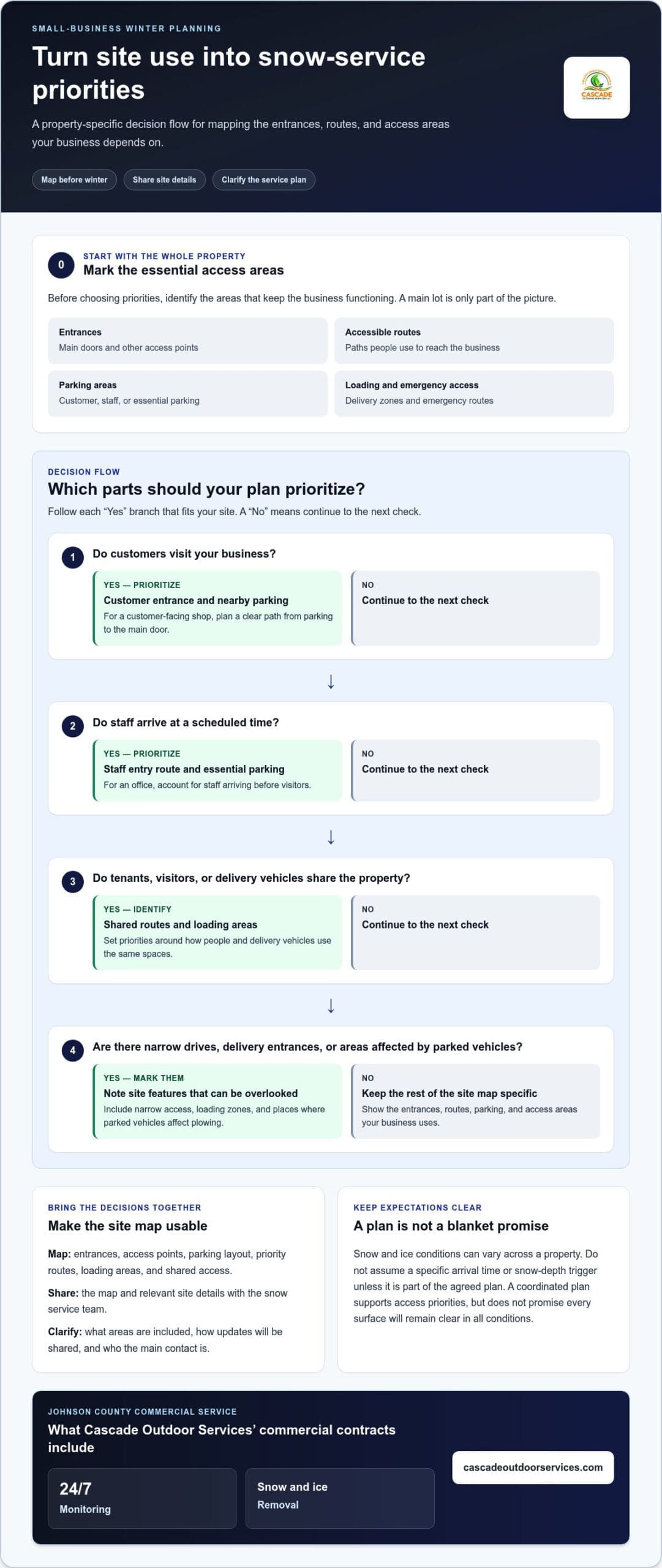
Start with the areas that keep the business functioning: entrances, accessible routes, parking areas, loading zones, and emergency access. A customer-facing shop may need a clear path from parking to its main door. An office with scheduled staff arrivals may prioritize its entry route and essential parking before visitors arrive. Map these areas before winter and share the map and relevant site details with the snow service team.
Consider more than the main lot. A delivery entrance beside a building, a narrow drive between neighboring businesses, or a shared walkway can be easy to overlook. Marking these features turns general expectations into property-specific priorities. The work and equipment needed for snow removal can vary by site, as outlined in this overview of snow removal techniques and equipment.
How can Kansas City-area winter weather affect business access?
For businesses across Johnson County and nearby Kansas City communities, changing snow and ice conditions make active planning more useful than relying on assumptions about a typical season. Light accumulation, drifting snow, and icy patches can affect different parts of a property in different ways. Monitor forecasts as a winter event approaches, and keep communication with your snow service aligned with the agreed plan.
Clear expectations matter before weather conditions become demanding. Commercial snow and ice management can be part of ongoing property care, with a plan shaped around how each site operates. Cascade Outdoor Services provides commercial snow and ice management in Johnson County. Its commercial contracts include 24/7 monitoring and snow and ice removal. A coordinated plan accounts for priority access areas without promising that every surface will remain clear in all conditions.
What dependable commercial snow-plowing service looks like
Dependability starts with a service plan made before a storm. It brings together weather monitoring, agreed site priorities, equipment suited to the property, and a clear way to communicate as conditions change. Reliable commercial snow service is a coordinated plan for monitoring conditions and addressing a property’s agreed access priorities. It supports winter operations without promising that every surface will stay clear in every condition.
Cascade Outdoor Services’ commercial contracts include 24/7 monitoring and snow and ice removal. Monitoring keeps weather conditions in view, while a property-specific plan gives the service team direction about the site and intended work areas. For a broader look at how commercial providers approach advance preparation and coordinated service, see Commercial snow and ice management planning.
What should a snow-plowing plan clarify before winter?
A useful plan describes the property, including entrances, access points, parking layout, and areas that need special attention. Note narrow drive lanes, loading areas, shared access, and places where parked vehicles may affect plowing. These details make the intended work clearer than general expectations alone.
Agree on communication expectations as well. Establish how updates will be shared and who the main contact is for site questions. Keep the service scope and communication plan easy for managers to find, especially if the person overseeing operations changes during the season.
Why do monitoring and communication matter during snow events?
Weather can shift, and conditions across a property may change as snow accumulates or ice develops. Monitoring helps inform service planning as an event unfolds. Communication helps owners and managers understand what’s happening instead of relying on assumptions. A clear channel also lets the business share relevant changes, such as a temporary access issue or a change in how the site is being used.
Look for clear expectations rather than a one-size-fits-all promise. Don’t assume a specific arrival time or snow-depth trigger unless it is part of the agreed plan. Understand how monitoring informs the service approach, which parts of the property are included, and how updates will be handled. That framework helps you judge whether a plan fits your operations. For local commercial snow and ice management, learn about Cascade Outdoor Services and its approach to property care.
How to compare snow-plowing options for a small business
A small lot still has access points, pedestrian routes, and operating hours to consider. Limited space can make snow placement and parking access especially important. Informal or reactive service can leave expectations unclear, so compare plans against how your business uses the property rather than assuming a compact site needs a casual approach.
Use the same criteria to compare options. That makes differences easier to spot and keeps the focus on how well a plan fits your property.
| Comparison point | What to look for |
|---|---|
| Scope | How the plan describes plowing, ice management, and the areas included. |
| Monitoring | How changing weather conditions are monitored and inform service planning. |
| Communication | How updates are shared and who the business can communicate with about site needs. |
| Priority areas | Whether entrances, parking, pedestrian routes, and loading zones are addressed in the site plan. |
| Service structure | Whether the arrangement is seasonal or per event, and how that structure supports winter planning. |
Which service details matter most when comparing providers?
Read the proposed scope alongside a map of your property. You should be able to tell which surfaces are included and how plowing and ice management relate to the areas your staff, customers, or delivery vehicles use. If the entrance is clear but the route from parking remains difficult to use, the plan may not reflect your actual priorities.
Check that monitoring and communication are explained clearly, too. A defined approach helps managers coordinate opening routines and share relevant site information. Reliable snow plowing for small business is easier to assess when the service plan connects its stated work to the property’s day-to-day needs.
Is the lowest-cost option always the most reliable choice?
Cost alone won’t show whether a plan fits your lot or operations. Compare what the arrangement covers, which access areas it accounts for, and how weather monitoring and updates are handled. A seasonal structure may help with advance planning, while a per-event arrangement may suit a business evaluating service one event at a time. Neither structure is automatically better. The important question is how clearly each one aligns with your priorities.
Before deciding, note any gaps between your site map and the service description. A clear scope and communication plan make expectations easier to manage throughout winter.
How to prepare your business property for snow service
A clear site plan gives snow crews practical direction and helps business owners consider access before winter operations begin. Commercial properties in Johnson County range from compact storefront lots to shared office sites, so preparation should reflect your property’s layout and daily use. Reliable snow plowing for small business starts with clear information about where people enter, move, park, and make deliveries.
Create a simple winter access map
Mark the areas that matter to customers and staff, then note where equipment can move safely and where snow should not be piled. Include:
- Main entrances and customer routes from parking to the building.
- Employee parking, loading areas, and emergency access.
- Restricted zones, tight turns, fixed obstacles, and locations where snow storage could block access.
Keep the map straightforward. Add notes about features that may be hard to see under snow, such as curbs, narrow drive lanes, or low obstacles. Share it with the snow service team before winter operations begin, and update it if the property layout or access needs change. A map makes priorities visible instead of leaving crews to infer them during a storm.
Plan for ice, snow storage, and melting snow
Choose possible snow-storage areas with the whole site in mind. A pile beside a walkway may narrow the route, while snow near a parking entrance can reduce usable space. As temperatures change, melting snow can run across pavement and refreeze, affecting walkways and vehicle access. Note how water moves across the lot and where it may collect.
Keep drainage routes, grates, and catch basins in mind when identifying storage areas. Piling snow where it can obstruct drainage may contribute to standing meltwater in the wrong place. Walk the property before winter and flag locations where drainage or grading affects access, particularly around low points, entrances, and pedestrian paths.
Preparing a site is part of dependable winter property care. Clear priorities, useful site information, and sensible snow-storage planning help inform the service approach. For related concerns about water flow around your property, review Cascade’s grading and drainage services.
Plan reliable snow plowing for your Johnson County business with Cascade
A practical winter plan brings together four elements: your property’s access priorities, a clearly defined service scope, weather monitoring, and communication. These details help align snow and ice management with how your business or shared property operates, rather than relying on assumptions about which areas matter most.
What Cascade’s commercial snow service supports
Cascade Outdoor Services is locally owned and serves businesses and HOAs in Johnson County, Kansas. Its commercial snow service includes snow plowing and ice management. Commercial contracts include 24/7 monitoring and snow and ice removal.
Planning starts with the property itself. A small business may need to account for an entrance, parking area, or delivery access. An HOA or shared commercial property may have several routes serving different users. Identifying these priorities helps shape the service plan around important access areas during winter weather. Conditions can change during a snow or ice event, so the goal is a coordinated approach, not a guarantee that every surface will remain clear.
Take the next step before the next winter event
Before discussing service, note your property type and the areas that matter most: entrances, customer and employee routes, parking, loading zones, or shared access. A site map and notes about obstacles or drainage can make those priorities easier to explain. Clear information connects the service scope to how the property is used.
Snow management is one part of ongoing exterior care. If drainage or grading also affects your property, explore Cascade’s services for property maintenance. For a property-specific conversation about winter access, discuss commercial snow service for your property.
Set your business up for a more dependable winter
A well-prepared snow plan starts with knowing which areas matter most, defining what the service covers, and agreeing on how monitoring and communication will work. A simple property map and clear priorities give your snow service team useful direction before winter weather arrives.
Reliable snow plowing for small business is about more than clearing a lot. It’s a practical plan shaped around your property and daily operations. Cascade Outdoor Services is locally owned and operates in Johnson County, Kansas. Its commercial contracts include 24/7 monitoring and snow and ice removal.
Before the next winter event, consider your property’s entrances, parking, pedestrian routes, loading areas, and snow-storage needs. Then discuss commercial snow service for your property with Cascade Outdoor Services to plan for winter access.
Frequently Asked Questions
What makes a snow-plowing service reliable for a small business?
A reliable snow-plowing service combines weather monitoring, agreed property priorities, equipment suited to the site, clear communication, and a defined scope. For a small business, the plan should reflect how people use the property, from parking and pedestrian routes to entrances and loading areas. Clarify which parts of the property are covered and how updates are handled. Reliable snow plowing for small business is a coordinated plan, not just plowing after snowfall.
When should a small business arrange snow-plowing service?
Arrange snow-plowing service before winter weather begins. That gives you time to map the property, identify priority access routes, and establish the service scope and communication approach. Johnson County businesses can use this planning time to account for storefront entrances, employee parking, delivery access, and shared areas. Preparing in advance also gives managers time to coordinate responsibilities across the business or HOA instead of sorting out site details during a snow event.
Does a small business need commercial snow removal?
A small business may benefit from commercial snow removal if snow or ice could interfere with customer access, staff arrivals, deliveries, or use of a shared property. The decision depends on the site and operating routine, not just lot size. A compact storefront with limited parking can still have important access needs. In Johnson County, a property-specific plan can help define which areas need attention and how service supports winter operations.
What should a commercial snow-plowing contract include?
A commercial snow-plowing contract should clearly describe the property, service scope, priority areas, monitoring, communication, and service structure. Clarify whether the arrangement is seasonal or per event, and how plowing and ice management are addressed. A site map can show entrances, parking, pedestrian routes, loading zones, and snow-storage locations. The agreement should give the business a shared understanding of the intended work without relying on assumed arrival times or snow-depth triggers.
How can a business prepare its parking lot for snow plowing?
Map entrances, customer and employee routes, parking, loading areas, emergency access, obstacles, and restricted zones. Identify where snow can be stored without blocking visibility, circulation, walkways, or drainage. Share the map and relevant site notes with the service team before winter operations begin. Consider how parked vehicles or changes in lot use could affect plowing access, and include those conditions in site planning.
Can snow piles cause drainage or refreezing problems?
Yes. Snow piles can narrow walkways or parking, and meltwater can flow across pavement before refreezing as temperatures change. This can create slick patches near entrances, low areas, and frequently used paths. Before winter, identify sensible snow-storage locations and note drainage routes, catch basins, and grates. Including these features in the site plan helps account for water movement as part of winter access planning.
How does 24/7 snow monitoring help a business?
24/7 monitoring keeps weather conditions in view so service planning can account for changes rather than relying on fixed seasonal assumptions. For a business, that can reduce uncertainty about how snow and ice management is coordinated. Cascade Outdoor Services includes 24/7 monitoring and snow and ice removal in its commercial contracts for Johnson County properties. Monitoring supports planning, but it doesn’t promise a specific arrival time or that every surface will remain clear.
How much does commercial snow plowing cost for a small business?
Commercial snow-plowing cost depends on the property and the work included. Factors can include site size and layout, areas of coverage, ice management, and whether service is structured seasonally or per event. Compare the scope and planning details alongside the quoted amount. For a small business, a lower figure alone won’t show whether entrances, parking, pedestrian routes, and other priority areas are addressed in the service plan.