
Fall is the best time for Johnson County homeowners to plan next spring’s landscape, and for some projects it is the best time to do the work itself. New sod and new trees root in while the soil is still warm and the air is cool, and landscape lighting can go in before the ground freezes so it’s ready for the long winter evenings. Cascade Outdoor Services plans and installs these projects for homes in Overland Park, Olathe, Leawood, Lenexa, Shawnee, and Prairie Village.
Key Takeaways
- Plan in fall, build early: a design settled in October and November lets installation start as soon as spring weather allows, instead of waiting in the spring rush.
- Sod: fall gives cool-season grasses like tall fescue some of the best establishment conditions of the year in Kansas.
- Trees: trees planted in fall grow roots through fall and again in spring before facing their first Kansas summer.
- Lighting: uplights, path lights, and deck lights can be installed in fall while soil is workable, and you’ll use them most during the short days ahead.
- Service area: Cascade serves Johnson County, KS: Overland Park, Olathe, Leawood, Lenexa, Shawnee, Prairie Village, and surrounding areas.
Table of Contents
- Why plan your spring landscape in fall?
- Is fall a good time to install new sod in Johnson County?
- Why is fall a good time to plant trees in Kansas?
- Should you install landscape lighting in the fall?
- What does a fall planning visit with Cascade cover?
- Frequently asked questions
Why Plan Your Spring Landscape in Fall?
Planning a spring landscape in fall gives you time to make decisions before installation season starts. Once the design, plant list, and budget are settled over the winter, work can be scheduled for the first workable weeks of spring rather than waiting behind everyone who starts planning in April.
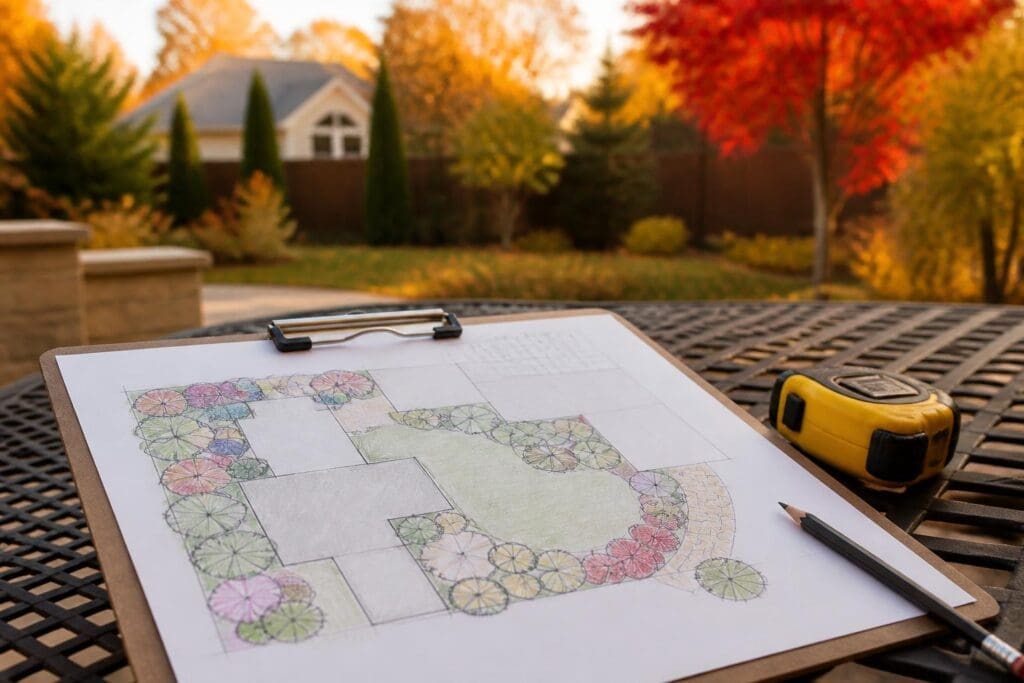
What can you see in a fall yard that you can’t see in spring?
Fall shows how a yard actually performed over the past year. Thin or bare turf from summer heat, spots where water sat after storms, beds that got too much or too little sun, and trees that struggled are all still visible in October. Those are the details a good landscape plan should answer, and they are easier to spot now than after spring green-up hides them.
What decisions should be made before spring?
- Which areas need new sod versus seeding or simple overseeding
- Where new trees and shrubs will go, and how big they will get at maturity
- Whether any grading or drainage fixes need to happen before planting (grading and drainage services)
- Where lighting fixtures, wire runs, and the transformer will sit, so beds and hardscape aren’t torn up twice
- Which projects happen this fall and which wait for spring
Is Fall a Good Time to Install New Sod in Johnson County?
Yes. Most Johnson County lawns are cool-season grass, usually tall fescue, and fall is one of the best times of year to establish it. Kansas State University’s turfgrass team notes that fall provides some of the best conditions of the year for establishing cool-season turf in Kansas, and that tall fescue remains the most widely adapted cool-season grass for the state (K-State Turfgrass).

Why does fall sod take hold well?
In fall the soil is still warm enough for roots to grow while cooler air puts less stress on the grass blades. New sod laid on well-prepared soil can root in before winter dormancy and green up with the rest of the lawn in spring, ahead of summer heat.
When does sod make more sense than seed?
Sod gives you a finished lawn on the day it is installed, which helps on slopes that wash out, in high-traffic areas, around new construction, or when you want the yard usable quickly. Seeding usually costs less but takes longer to fill in. If you are weighing cost, our guide to what shapes a sod installation estimate walks through the factors, and our lawn renovation service in Johnson County covers both approaches.
How late in the year can sod go down?
Sod can be installed as long as the ground is not frozen and the sod can be kept watered. Earlier in fall gives roots more time to establish before winter, so the sooner a fall sod project is scheduled, the better.
Why Is Fall a Good Time to Plant Trees in Kansas?
Fall-planted trees get two seasons of root growth before their first summer. K-State Research and Extension explains that most root growth on woody plants happens in spring and fall, so a tree planted in fall grows roots through fall and early winter, then again in spring, before summer heat and drought arrive (K-State: Fall Is for Planting).

What makes a tree planting succeed?
- The right tree for the spot: mature height and spread, sun exposure, and distance from the house, driveway, and utilities.
- Correct depth: the root flare should sit at or slightly above grade. Planting too deep is a common cause of long-term problems.
- Mulch, not a mulch volcano: a wide, shallow ring of mulch kept off the trunk.
- Watering through the first year, including dry spells in fall and winter.
Is there a deadline for fall tree planting in Johnson County?
Evergreens benefit from going in earlier in fall so they can settle before the ground freezes, while many deciduous trees can be planted later into the season. For timing details, see our post on the fall planting deadline in Johnson County.
Should You Install Landscape Lighting in the Fall?
Fall is a practical time to install landscape lighting. The soil is still easy to work for burying low-voltage wire, the beds are being cleaned up anyway, and the days are getting shorter, so you get the most use from the lights right away through winter and the holidays.
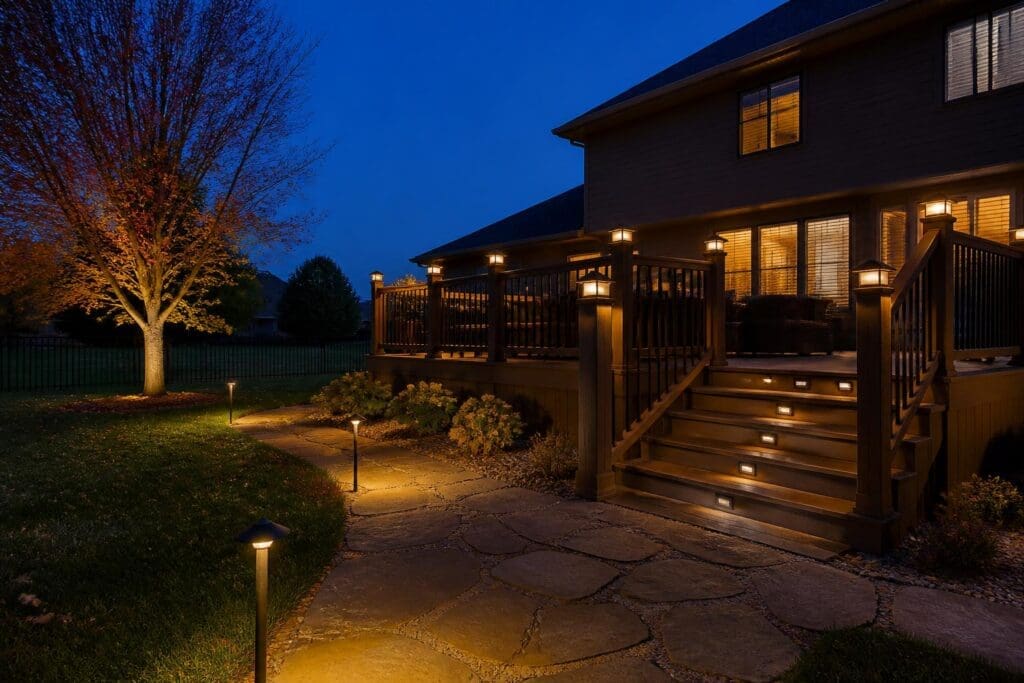
What types of landscape lighting does Cascade install?
- Uplights to wash light up a home’s facade, stone, or the trunk and canopy of a tree
- Path lights along front walks, side yards, and garden paths so people can see where they’re stepping
- Deck and step lights on stair risers, posts, and rails to make a deck safer and more usable after dark (see our deck building and repair services)
Why plan lighting together with planting?
When lighting is planned alongside new beds, trees, or sod, the wire can be run before plants and turf go in, and fixtures can be placed to light the trees you’re planting now as they grow. Planning both at once avoids digging up a new lawn or bed later to add lights.
What Does a Fall Planning Visit With Cascade Cover?
A fall planning visit is a walk-through of your property in Overland Park, Olathe, Leawood, Lenexa, Shawnee, Prairie Village, or elsewhere in Johnson County. We look at turf, drainage, sun and shade, existing trees and beds, and where lighting would make the biggest difference. From there, we put together a plan that splits the work into what makes sense to do this fall and what should wait for spring. See all of our landscaping and outdoor services.
Ready to plan? Request a fall planning visit or call (913) 299-5613.
Frequently Asked Questions
Can I install sod in October or November in Johnson County, KS?
Yes, as long as the ground isn’t frozen and the sod can be watered until it roots. Earlier in fall is better because it gives roots more time before winter dormancy.
Is fall or spring better for planting trees in Kansas?
Both work. Fall has an edge because a fall-planted tree gets root growth in fall and again in spring before its first summer, according to K-State Research and Extension. Spring-planted trees need extra watering and attention during their first summer.
Why should I plan my spring landscape in the fall?
Planning in fall lets you see problem areas left over from summer, settle the design and budget over the winter, and get on the schedule for the first workable weeks of spring.
Can landscape lighting be installed in the fall?
Yes. Fall is a good time because soil is workable for burying wire and the shorter days mean you’ll use the lighting right away. Uplights, path lights, and deck lights can all be installed before the ground freezes.
What areas does Cascade Outdoor Services serve?
Cascade Outdoor Services serves Johnson County, Kansas, including Overland Park, Olathe, Leawood, Lenexa, Shawnee, Prairie Village, and surrounding areas.