
What makes a front yard welcoming is not necessarily the number of plants. Good landscape design for front yard Overland Park homes starts with the approach to the door, the shape of the property, and how you want to use and care for the space. Slopes and drainage can also affect where paths, planting, and lawn will work best.
A practical plan balances appearance with access, site conditions, and upkeep. Before choosing plants or materials, take stock of the layout, observe where water flows, and note which features you want to keep. Cascade Outdoor Services provides landscape design and planting, as well as grading and drainage services, in Overland Park and throughout Johnson County, including Olathe, Leawood, Lenexa, Shawnee, and Prairie Village.
Key Takeaways
- Start with how you want the front yard to welcome visitors and guide everyday movement to your entry.
- Note slopes, water patterns, existing features, access routes, and sun exposure before choosing what to add.
- Compare planting beds, lawn, walkways, mulch or rock, and structural features by their purpose and upkeep needs.
- Sketch the house, driveway, entry route, existing planting, and problem areas to turn ideas into a workable plan.
- Thoughtful landscape design for front yard Overland Park homes accounts for local weather and the conditions of each property.
What Should Front Yard Landscape Design in Overland Park Accomplish?
Front-yard design brings appearance, access, and function together around the home and the conditions of the property. It should make the entrance easy to find, provide a clear route to the door, and place planting where it adds character without narrowing the way. Cascade Outdoor Services serves Overland Park and nearby Johnson County communities, including Olathe, Leawood, Lenexa, Shawnee, and Prairie Village.
Think about the whole arrival, from the sidewalk or driveway to the front door. A clear walkway, planting that frames rather than hides the entrance, and features suited to the house can make the yard feel considered and easy to navigate. The guiding ideas behind landscape design principles and considerations include both how a space looks and how people move through it.
The right scope depends on what you want to improve. A focused refresh might update an unfinished bed or improve planting near the entry, while a broader redesign can reconsider how the yard’s features work together. Cascade’s landscape design and planting services bring those priorities into a coordinated plan.
Which front-yard goals should you set before choosing features?
Identify what the yard needs to do better before choosing plants or materials. Separate functional needs from decorative additions so the plan addresses the most important issues first.
Ask whether the entrance is easy to see, whether the route from the driveway or sidewalk feels convenient, and whether you want more planting or simpler upkeep. Note specific areas that feel awkward, bare, crowded, or unfinished. These observations make it easier to describe what you want the design to change.
Then rank the priorities. A clear route to the door is a functional need; an accent feature may be optional. If the main concern is one tired planting area, a refresh may be enough. If access, planting, and the overall layout all need attention, a broader redesign may make more sense.
How should the design relate to your home and entrance?
Choose shapes, sizes, and placements that complement the home and make the entrance easy to find. A simple site sketch lets you compare layouts before settling on one.
Consider the home’s scale and lines when planning beds, paths, and structural features. Oversized elements can crowd a small entry, while sparse planting may not provide the framing you want. Aim for balance, with features that support the house’s appearance rather than compete with it.
On your sketch, mark the house, driveway, sidewalk, front door, and the route you take to reach it. Add existing planting and possible locations for a new bed or other feature. Try a few arrangements, then check that the route stays clear and the entry remains visually prominent.
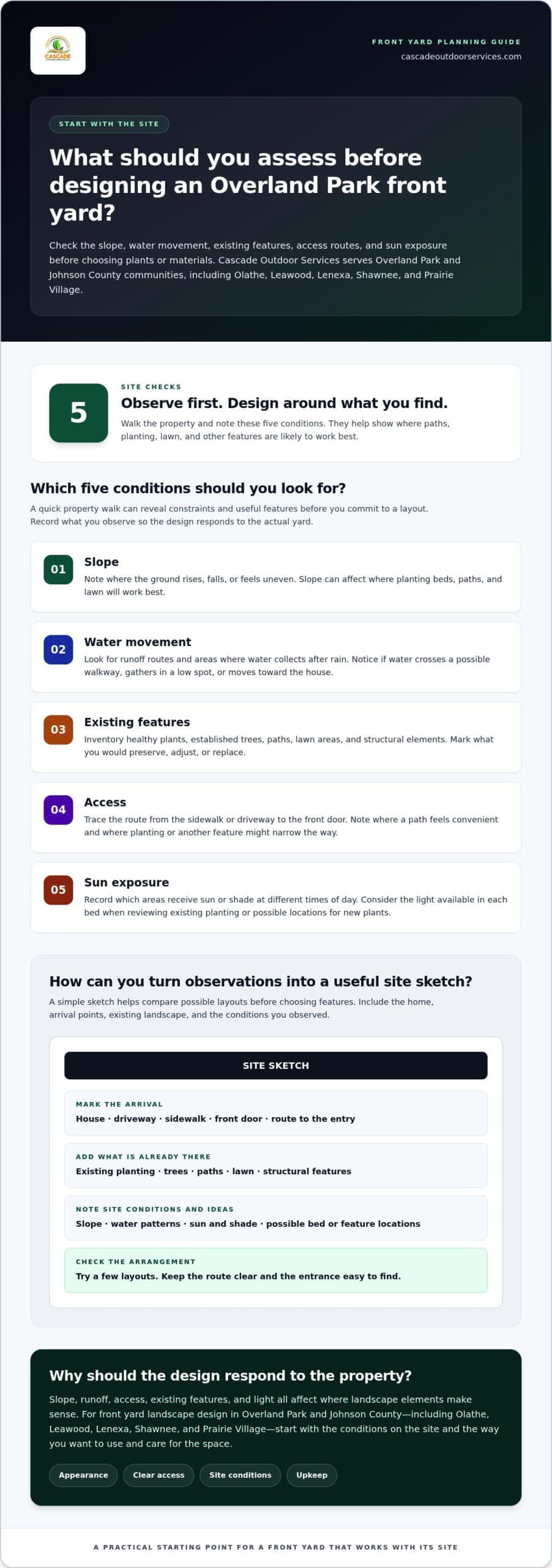
What Should You Assess Before Designing an Overland Park Front Yard?
Before choosing plants, paths, or hardscape, assess the slope, water movement, existing features, and how people use the space. These observations help landscape design for front yard Overland Park homes respond to actual site conditions rather than forcing features into unsuitable locations.
Walk the property and note:
- Slope: Where the ground rises, falls, or feels uneven.
- Water movement: Where runoff travels and where water collects after rain.
- Existing features: Healthy plants, trees, paths, lawn, and structural elements.
- Access: The routes from the sidewalk and driveway to the front door.
- Sun exposure: Which areas receive sun or shade at different times of day.
Local weather and the conditions of each Johnson County property should inform durable design choices. Record what you observe before deciding where beds, paths, or other features belong.
How can slope and water movement affect the layout?
Slope and runoff can influence where planting beds, paths, and lawn will work best. Observe the yard during and after rain, then use those patterns to guide layout and grading decisions.
Look for water crossing a proposed walkway, collecting in a low area, or moving toward the house. Those patterns may mean a bed or lawn area belongs elsewhere, or that grading and drainage should be considered before adding features. A visible low spot does not always have a simple fix, so the right approach depends on the property.
If drainage concerns affect your plans, Cascade’s grading and drainage services address site conditions as part of a practical landscape plan.
What existing features should stay or change?
Inventory existing plants, established trees, paths, lawn areas, and structural features before deciding what to remove or add. Keep elements that support your goals, and reconsider those that obstruct access, sit awkwardly, or require more upkeep than you want.
A healthy tree may provide useful structure, and an established path may already connect the driveway to the entry clearly. Crowded planting along the route or a feature that complicates routine care may be worth rethinking. Note the light available in each bed, too, since sun exposure affects whether the current planting suits its location.
Mark these features on a simple site sketch and note what you’d preserve, adjust, or replace. This gives you a practical starting point that considers drainage, access, and existing landscape elements together.
Which Front Yard Design Elements Should You Compare?
Compare front-yard features by their purpose, appearance, upkeep, and suitability for your property. For landscape design for front yard Overland Park homes, the right mix depends on your priorities and site conditions, not a universal formula.
Use this comparison to weigh common elements before deciding what belongs in your plan. Upkeep varies with the materials, plants, and site, so consider the care you’re comfortable providing instead of assuming any choice is maintenance-free.
| Element | Purpose | Visual effect | Maintenance considerations | Site suitability |
|---|---|---|---|---|
| Planting beds | Add plants and define areas near the home or walk. | Bring texture, color, and seasonal interest. | Plants need care suited to their growth and site conditions. | Work best where available light, space, and drainage suit the planting. |
| Lawn | Keep open ground between the home, beds, and access routes. | Creates a simple, uncluttered area. | Consider the ongoing care required to maintain the area. | Fits areas where open space supports how you use the yard. |
| Walkways | Guide movement from the sidewalk or driveway to the entry. | Add a clear line through the front yard. | Keep the route clear and consider its condition over time. | Place where the path serves everyday access and fits the layout. |
| Mulch or rock | Finish planting areas and cover exposed soil. | Creates a defined surface around plants. | Plan for upkeep appropriate to the material and bed. | Use where it suits the bed, planting, and site conditions. |
| Structural features | Address layout needs, including grade changes. | Give the yard a more defined form. | Care depends on the feature and materials selected. | Consider retaining walls when a grade change or layout calls for structural support. |
How do planting beds and lawn serve different purposes?
Planting beds add softness and seasonal interest, while lawn provides open space and visual simplicity. Choose a balance that reflects how you want to use the yard and the care you’re prepared to give it.
Beds can frame an entry or soften a walkway, but they also add areas to tend. Lawn keeps the composition open, though it has its own upkeep needs. You don’t have to fill every available patch with a feature. Leave open space where it helps the yard feel orderly and accessible.
When might paths, mulch, rock, or retaining walls fit?
Paths make the route to the entrance clear, while mulch or rock can finish planting areas. A retaining wall may suit a grade change or layout need, rather than serving as decoration alone.
Consider how each feature relates to the others. A path should connect useful destinations, and bed materials should suit the planting and site. If the design involves a change in grade, a retaining wall may be a structural option. Cascade Outdoor Services provides timber, segmental block, and natural stone retaining walls, as well as landscape design and planting.
How Can You Turn Front Yard Ideas Into a Practical Plan?
Turn front-yard ideas into a practical plan by recording your goals, mapping existing features, prioritizing needs, comparing design elements, and reviewing the complete layout. A simple sketch helps you see how each choice fits the house, entry route, and site before you settle on individual plants or finishes.
For landscape design for front yard Overland Park homes, planning in stages can keep the project focused and distinguish essential work from optional upgrades. Use this sequence:
- Record your goals. Write down what you want the yard to do better, such as making the entrance easier to find or simplifying care.
- Map existing features. Mark the house, driveway, entry route, current planting, paths, and any features you want to keep.
- Prioritize needs. Identify access or drainage concerns that should guide the layout before decorative additions.
- Compare elements. Consider how beds, lawn, walkways, mulch or rock, and structural features suit your goals and property.
- Review the plan. Look at the whole arrangement and adjust anything that feels crowded, disconnected, or impractical.
The order matters. If a path crosses a low area where water collects, for example, account for that condition before settling on nearby planting or finishes.
What should your front-yard sketch include?
A useful sketch shows the house outline, driveway, sidewalk, front door, entry route, and visible landscape features. Add observed problem areas, then use the drawing to test placements before choosing specific plants or finishes.
The sketch doesn’t need to be to scale. Mark areas where you’ve noticed standing water, awkward slopes, or difficult access, along with existing trees, beds, and paths. Draw possible locations for proposed features in pencil or on a separate copy. Comparing arrangements can reveal conflicts, such as a new bed narrowing the route to the door.
How can you keep the plan manageable over time?
Separate necessary work from upgrades that can be added later, and consider the upkeep and seasonal appearance of each choice. Reviewing the full layout helps individual additions feel connected rather than like unrelated fixes.
Start with needs that affect access or drainage, then decide which visual improvements matter most. Optional features can be phased in while keeping the overall layout in mind. A bed added later should still relate to the path and other planting areas. Consider the routine care each element requires and how the yard will look as plants change through the seasons.
If you’d like help turning your priorities into a coordinated plan, explore Cascade’s landscape design and planting services.
How Can Cascade Help With Front Yard Landscape Design in Overland Park?
Cascade Outdoor Services provides landscape design and planting for homeowners who want to turn front-yard priorities into a coordinated plan. The work considers project goals and property conditions, and can include grading and drainage when water management is part of the project.
Good planning connects each decision to how the yard functions. Planting, mulch or rock, grading, drainage, and structural features can affect the same space, so it helps to consider them together. This whole-property approach supports decisions that fit the site and the way you want to use it.
What can a project-specific landscape plan bring together?
A project-specific plan considers your goals alongside the property’s conditions. It can bring planting, mulch or rock, grading, drainage, and structural features into one coordinated approach.
If water movement affects a proposed planting area, account for it before settling on finishes or plant placement. If grade changes influence how the yard is organized, a structural feature may also be appropriate. The right combination depends on the site and your priorities.
What is a useful next step for an Overland Park homeowner?
Outline what you want the front yard to do, note conditions that could affect the plan, and explore the relevant service information. A few clear priorities give the design process a practical starting point.
Bring together your goals, the features you want to keep, and any concerns about access, slope, or water movement. This gives the project a grounded basis and connects appearance with everyday function. Cascade serves homeowners in Overland Park and throughout Johnson County, including Olathe, Leawood, Lenexa, Shawnee, and Prairie Village.
For landscape design for front yard Overland Park projects, explore Cascade’s landscape design and planting services. A coordinated plan helps you make informed choices about how the front yard should look, function, and fit the property.
Ready to Make Your Front Yard Work Better?
You don’t need to plan every detail at once. Start with the change that would make the biggest difference to your daily routine, then let that priority guide the next design decision. This keeps the project focused on your home and the way you use its entrance.
For landscape design for front yard Overland Park homes, Cascade Outdoor Services provides landscape design and planting, with grading and drainage services for related site needs. Locally owned and operated in Johnson County, Kansas, Cascade serves Overland Park, Olathe, Leawood, Lenexa, Shawnee, and Prairie Village.
Ready to take the next step? Explore landscape design and outdoor services and start planning a front yard that feels welcoming, works for your property, and suits your everyday needs.
Frequently Asked Questions
Is front yard landscape design only about curb appeal?
No. Curb appeal matters, but a front-yard plan should also account for how people reach the entrance, how the household uses the space, and what the existing landscape needs. Drainage and upkeep can affect which features make sense, too. For example, someone who regularly carries items from the driveway may prioritize a convenient approach. The right design depends on the home and site, not a universal template.
Can you redesign a front yard without removing all its existing plants?
Yes. A redesign can retain existing plants when they still suit your goals and the conditions around them. An established shrub may fit the new layout, while crowded growth near a walkway could need adjustment. Take stock of what’s healthy, what’s awkward to care for, and what blocks access. Whether a plant should remain depends on its condition and placement.
How can a small front yard feel more welcoming?
For landscape design for front yard Overland Park homes with limited space, keep the entry route easy to follow and choose a focused set of features that complement the house. A clearly defined approach and coordinated planting can feel more intentional than several unrelated accents competing for attention. Consider the home’s scale and the available space before adding features. No single style or plant choice suits every small yard.
Can front yard landscaping include a solution for drainage problems?
Yes. Grading and drainage can be considered alongside the landscape layout when water movement affects the property. Before planning a bed or path, note where water collects or flows, including areas that stay wet after rain. The appropriate response depends on the site, so avoid choosing a technical fix based on appearance alone. Cascade’s grading and drainage services address related property needs.
Should a front yard have a walkway to the front door?
A walkway can make the route from the driveway or sidewalk to the front door clear, but a new path isn’t necessary if existing access works well. Consider how household members approach the entrance, whether the route is convenient, and how much space is available. A path should connect naturally with the front door and fit the rest of the yard, rather than becoming an isolated feature.
How do I plan a front yard that is easier to maintain?
Start by deciding what level of routine care fits your household, then choose a coordinated layout with those preferences in mind. Planting beds, lawn, and hardscape each have different upkeep needs, and no design is maintenance-free. Consider how often you want to tend planted areas before expanding them. Weigh your maintenance preferences alongside the property’s conditions before settling on features, so the plan feels manageable over time.