
What if the key to low maintenance landscaping Johnson County homeowners want is choosing less to maintain, not simply doing less work? A yard can still feel welcoming and full of character when its layout, planting, and drainage suit the property. But choices that look simple at first can create recurring pruning, watering, or cleanup.
It’s reasonable to want an attractive landscape without giving up every weekend to upkeep. This guide explains how to match design choices to the time you want to spend on your yard, while accounting for local conditions such as summer heat, soil, grading, and water movement.
You’ll learn how to assess your site, compare lawn and planting areas with mulch, rock, and hardscape, and see why drainage planning matters to long-term manageability. You’ll also learn how to organize improvements into useful stages while keeping the overall plan in view. Cascade Outdoor Services serves Johnson County, Kansas, including Overland Park, Olathe, Leawood, Lenexa, Shawnee, and Prairie Village.
Key Takeaways
- Low maintenance landscaping Johnson County starts with choices that suit your property and the amount of upkeep you want to manage.
- Group planting areas where they’re easy to reach and care for, instead of scattering maintenance needs across the yard.
- Compare lawn, planting beds, mulch, rock, and hardscape by their distinct care needs before choosing a mix.
- Assess your yard’s existing conditions and priorities before deciding what to change.
- Connect landscape design with grading, drainage, and ongoing care so you can build a plan in useful stages.
What does low-maintenance landscaping mean in Johnson County?
Low-maintenance landscaping makes a yard’s recurring care more manageable; it doesn’t mean the yard needs no attention. It matches planting, lawn, and surface choices to the property’s soil, slope, water movement, and the time the owner can give them. Those details matter across Johnson County, including in Overland Park, Olathe, Leawood, Lenexa, Shawnee, and Prairie Village.
The goal is a landscape that stays attractive without creating a steady cycle of avoidable work. A planting bed that’s easy to reach may be simpler to care for than one tucked behind obstacles. A slope that channels water toward a trouble spot needs a different plan from a level area with steady drainage. Start by observing how the yard behaves, then choose features that suit both the site and your routine.
Does low-maintenance landscaping mean no yard work?
No. A thoughtful design can reduce recurring work, but plants, lawns, and outdoor surfaces still need upkeep. The practical aim is to replace frequent, unplanned corrections with care that can be anticipated and managed.
For example, if water repeatedly washes soil from a bed, adjusting the layout or addressing the water flow may help prevent recurring repairs. Plants need attention as they establish, and leaves or other seasonal debris may still need clearing. Planned seasonal tasks are different from repeatedly fixing a landscape that wasn’t suited to its location. Low maintenance means reducing avoidable work, not expecting the yard to look after itself.
Why do Johnson County site conditions matter?
Soil, slope, sun and wind exposure, and water movement vary from property to property, even within the same community. Observing the actual site helps you make choices suited to Kansas soil and climate rather than relying on a one-size-fits-all plan.
Notice where water collects after rain, where it runs across the yard, and whether some areas dry out faster than others. Pay attention to how much sun each space receives and how the ground changes in elevation. These observations help you decide where lawn, planting beds, mulch, or rock may fit, and whether grading or drainage should be part of the design.
- Look for standing water, runoff paths, and areas where soil shifts or washes away.
- Note which spaces get strong sun, shade, or wind exposure.
- Consider how much time you want to spend on routine care and seasonal cleanup.
Xeriscaping principles offer one reference for designing with water conservation in mind. They’re not a ready-made solution for every Johnson County yard; the site’s conditions and your preferences should guide the choices. Cascade Outdoor Services’ Landscape Design & Installation can connect your priorities with the property itself, helping shape a plan around the level of ongoing care you want.
Which landscape design choices can reduce recurring work?
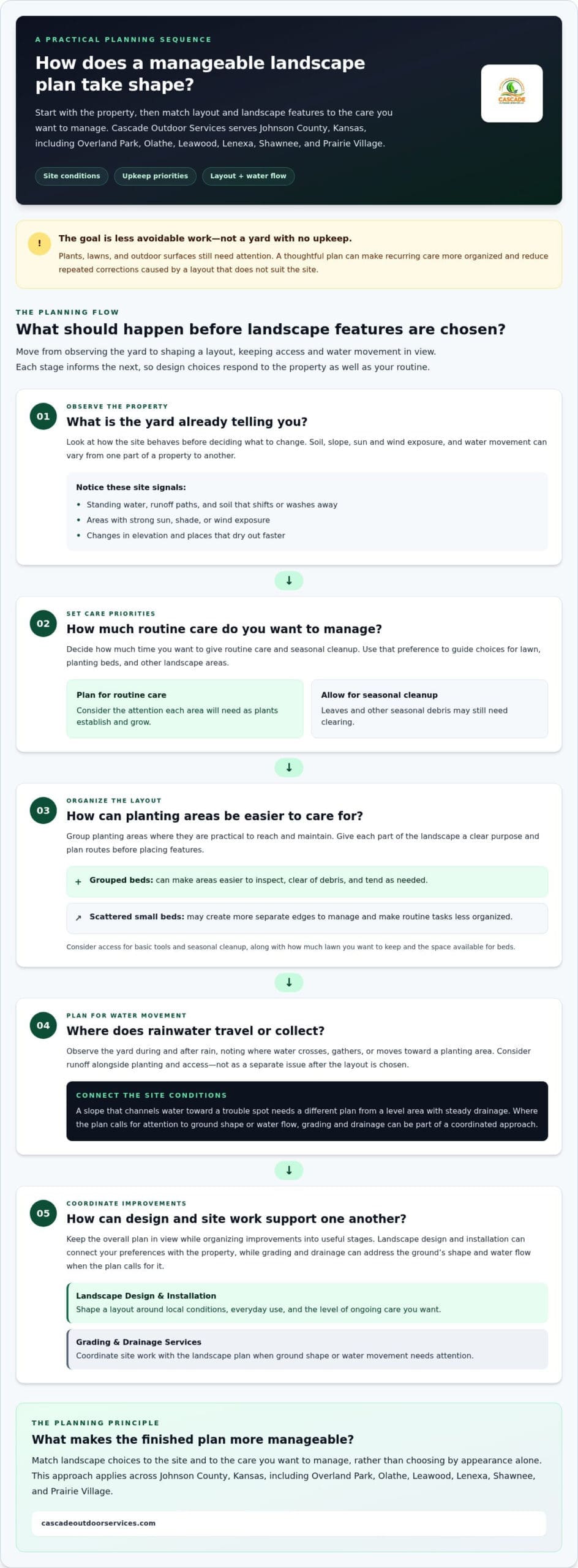
Design choices can reduce recurring work when they fit the property’s conditions and your preferred level of upkeep. Organize planting and other landscape features so routine care is accessible, and consider how water moves across the yard before settling on a layout.
A low maintenance landscaping Johnson County plan shouldn’t be built around appearance alone. Consider how you’ll reach each area, what care it will need as it grows, and whether it works with the way the property handles rain. Answering those questions helps keep routine tasks organized instead of scattered across the yard.
How can planting layout make routine care easier?
A coherent planting plan groups care needs into areas that are practical to reach and maintain. Cascade’s Landscape Design & Installation can account for local conditions and your upkeep preferences, planning a layout for everyday use as well as appearance.
For example, planting beds grouped near an accessible route can be easier to inspect, clear of debris, and tend as needed. By contrast, small beds scattered across the yard may create more separate edges to manage and make routine tasks less organized. The aim isn’t to remove variety. It’s to give each part of the landscape a clear purpose and make it possible to care for without repeatedly crossing the property or working around obstacles.
Before finalizing a layout, consider how you’ll move through the yard with basic tools and where you’ll need access for seasonal cleanup. Plan planting areas and transitions deliberately. A thoughtful design can also account for how much lawn you want to keep, the space available for beds, and how much ongoing attention you’re comfortable giving each area.
How should water movement shape a landscape plan?
Account for where rainwater flows and collects, because water movement can affect how well landscape areas hold their shape and remain manageable. Consider runoff alongside planting and access, rather than treating it as a separate issue after choosing the layout.
Observe the yard during and after rain. Notice whether water travels toward a planting area, crosses a path, or gathers near a part of the property you use often. These observations help guide where landscape features belong and whether the plan should address grading or drainage. They can also help you avoid placing a feature where ongoing runoff would make its care more difficult.
When the landscape plan calls for attention to the ground’s shape or water flow, Cascade’s Grading & Drainage Services can be part of a coordinated approach. The design and site work should support one another so the finished yard functions as well as it looks.
- Group planting areas where they’re easy to reach and care for.
- Plan routes and access before placing landscape features.
- Observe runoff and pooling so water movement informs the layout.
How do lawn, planting beds, mulch, rock, and hardscape compare?
Each surface and planting choice brings its own care needs, from tending lawn and plants to keeping hard surfaces clear. No option is automatically maintenance-free or right for every Johnson County yard, so compare routine attention, seasonal tasks, and how each choice fits your property.
| Choice | Routine attention | Seasonal tasks | May fit when |
|---|---|---|---|
| Lawn | Care for the grass and keep its edges presentable. | Address changes in lawn condition and seasonal debris. | You want open space for everyday use and are prepared to tend it. |
| Planting beds | Check plants, manage weeds, and keep bed edges tidy. | Clear debris and attend to plants as conditions change. | You want defined areas for planting and can give them regular attention. |
| Mulch | Keep beds orderly and watch for weeds or displaced material. | Refresh or adjust the bed as needed. | You want a finished look in planting areas and accept that the surface needs care. |
| Rock | Keep the area clear of debris and check that the surface stays in place. | Remove accumulated leaves and other seasonal material. | Its appearance and placement suit the site and surrounding landscape. |
| Hardscape | Keep surfaces clear and watch for changes that affect access. | Remove seasonal debris and maintain a neat transition to planted areas. | You need a durable route or usable surface in the overall plan. |
What upkeep should you consider for lawn and planting areas?
Lawn and planting beds call for different kinds of attention. Lawn care focuses on the condition and appearance of the grass, while beds need attention to plants, weeds, edges, and debris.
Consider the existing yard and the look you want before choosing how much lawn or planting space to keep. Lawn Renovation & Seeding is an option for addressing a lawn, but it doesn’t mean the lawn will need less upkeep. Cascade’s landscape and lawn services can fit those choices into a broader property plan.
When might mulch, rock, or hardscape fit the plan?
Mulch and rock can finish landscape beds, while hardscape can create a clear route or usable surface. Each has its own upkeep, and none prevents all weeds, debris, or future attention.
Mulch may suit a planted bed where a softer finish fits the design. Rock offers a different texture, but leaves and other debris can still collect among it. Hardscape may support access between parts of the yard, though its placement should work with the property’s slopes and water flow.
Choose a combination by weighing appearance, access, and the care you’re willing to handle. A walkway linking the home to a frequently used area may make movement easier, while the planting and ground surfaces around it still need to suit the site. Use each material where it serves a purpose, rather than assuming a change in surface removes maintenance.
How can you assess your Johnson County yard before changing it?
A useful landscape plan starts with observing your yard as it is and identifying what matters most to you. Note immediate problems separately from appearance goals and the upkeep you’re willing to manage, then use those priorities to decide what needs attention first.
What should you observe before choosing landscape changes?
Walk the property and record its slope, water movement, lawn and planting areas, and access routes. Notice which spaces are shaded or exposed, too, so design choices respond to the conditions on your property rather than assumptions about every Johnson County yard.
- Map the existing layout. Note where lawn, planting beds, paths, and frequently used outdoor areas are located. Mark places that are difficult to reach or work around.
- Look at the ground. Identify slopes, low spots, and places where water flows or collects. Record visible soil movement or areas that stay wet or dry compared with their surroundings.
- Notice changing exposure. Observe where shade falls and which areas receive more sun or wind. Conditions can differ across one yard, so note the location rather than making a general judgment about the whole property.
- Separate problems from preferences. List issues that interfere with access or use, such as a frequently muddy route, separately from goals like creating a neater entrance or changing the balance of lawn and beds.
This inventory helps you choose a first project. A water or access concern may deserve attention before a purely visual change. If the rest of the property is functioning well, a contained bed or front-yard area may be a practical place to start.
How can you set a realistic maintenance goal?
Set a goal by naming the recurring tasks you’d most like to reduce or organize, then weigh appearance and usable space against the care planted areas require. A focused plan can address the parts of the yard that matter most without assuming the entire property needs replacement.
Be specific about the work that feels difficult to keep up with. Is it tending separate planting areas, keeping a lawn in the condition you want, clearing seasonal debris, or maintaining access through the yard? Your answer helps define what “manageable” means for your household, instead of relying on a general idea of a low-maintenance landscape.
- Appearance: Which view or area would you most like to improve?
- Use: Where do you want clear, comfortable access or more usable space?
- Upkeep: Which recurring tasks are you prepared to continue, and which would you prefer to simplify?
For an Overland Park front yard, this assessment can help focus the design on the entrance, existing conditions, and the care you want to manage. Cascade’s Landscape Design & Installation can connect those priorities to a practical plan for the property.
How can Cascade support a manageable landscape in Johnson County?
Cascade connects landscape design, site conditions, and ongoing care to help homeowners plan an outdoor space around their priorities. Landscape Design & Installation, Outdoor Maintenance Services, and Grading & Drainage Services can each support a different part of a practical landscape plan.
A low maintenance landscaping Johnson County plan should account for how you use the property, what needs attention, and how much routine care you want to manage. Cascade Outdoor Services is locally owned and operated in Johnson County, Kansas, and is Licensed & insured.
How can design and property maintenance work together?
Landscape Design & Installation can shape the layout around the property’s conditions and your goals. Outdoor Maintenance Services can support routine care and seasonal cleanup as the landscape develops and changes.
Thinking about design and maintenance together connects the look of the yard with the work it will require. For instance, a plan can account for the areas you use most, the existing layout, and the upkeep you want to take on. That gives design decisions a practical purpose instead of treating appearance and care as separate concerns.
Outdoor Maintenance Services can help with ongoing property care, while Spring and Fall Cleanups address seasonal needs. These cleanups offer planned opportunities to clear accumulated debris and prepare the landscape for a change in season. Including them in your plan can keep maintenance from becoming an unstructured list of tasks.
Site conditions matter, too. Grading & Drainage Services can be considered alongside the landscape plan when the property’s shape and water movement affect how the yard functions. Addressing those conditions as part of the wider plan keeps the design grounded in the actual site.
What can you expect when planning a project with Cascade?
Cascade offers free on-site estimates, with detailed project estimates based on the scope of work and the property’s conditions. An on-site estimate lets the planning process account for the specific landscape instead of relying on a generic approach.
Before planning, identify the areas you want to improve, the site concerns that affect them, and the level of ongoing care you prefer. That information can guide a practical conversation about how design, grading, drainage, and maintenance relate to your goals. The work can then be considered as a connected plan, with the property’s needs and project scope in view.
For seasonal upkeep, Cascade’s Spring and Fall Cleanups can support care as conditions change through the year. Pairing those tasks with a considered landscape plan helps you understand both the intended result and the attention the property will need afterward.
Cascade serves Johnson County, Kansas, including Overland Park, Olathe, Leawood, Lenexa, Shawnee, and Prairie Village. Explore Cascade’s outdoor services to plan landscape work and ongoing care around your property.
How can you start with one clear landscape priority?
Start by choosing one area where a thoughtful change could make everyday care or use easier. A more manageable yard doesn’t require a complete redesign; let that first decision guide what comes next and keep the plan connected to your property and the time you want to spend outdoors.
For homeowners planning low maintenance landscaping Johnson County, Cascade Outdoor Services serves Johnson County, Kansas, including Overland Park, Olathe, Leawood, Lenexa, Shawnee, and Prairie Village. The next step is turning your priorities into a landscape plan that fits the site.
Explore Cascade’s outdoor services to plan landscape design, site work, and ongoing care around your property. Contact Cascade Outdoor Services to discuss your goals and request a free on-site estimate. Your yard can become a more welcoming, practical extension of your home, one well-considered improvement at a time.
Frequently Asked Questions
Do you work with HOA boards and property managers?
Yes. Cascade works with HOA boards and property managers on outdoor projects and maintenance in Johnson County. Services can include one-time capital projects as well as ongoing maintenance programs, depending on the property’s needs. These options support planning for a specific improvement and continued property care.
Can projects be completed in phases?
Yes. Cascade can complete projects in phases, giving homeowners, HOAs, and property managers a way to organize a larger outdoor improvement into manageable parts. You can identify the priorities that should guide the project plan, then discuss how to phase the work. The sequence depends on the project, so phasing is an option rather than a promise of a particular schedule or budget outcome.
Do you provide maintenance contracts?
Yes. Cascade provides maintenance contracts for ongoing property care. Outdoor Maintenance Services include routine property maintenance, seasonal cleanup, and commercial and HOA maintenance. The specific work depends on the project scope, making a contract a way to structure continuing care around the property’s needs.
Do you install French drains?
Yes. French drain installation is part of Cascade’s Grading & Drainage Services, with service throughout Johnson County, including Shawnee, Overland Park, Olathe, Lenexa, and Prairie Village. A French drain may be considered as part of a property’s drainage work, with the project scope shaped by the site. Cascade also provides landscape work and seasonal cleanup in the county.
What is the best way to fix standing water in a yard?
The right approach depends on what is causing the standing water. Grading can address slope issues, while French drains can handle water in low spots; neither is a universal fix for every yard. Cascade coordinates drainage planning with the existing landscape and outdoor structures, so the proposed work considers how the property is arranged. The focus is matching the approach to the cause and site conditions.
Can grading be done without replacing the entire landscape?
Often, yes. Cascade uses targeted corrections when grading can address the issue without replacing the entire landscape. Whether that approach fits depends on the yard and the problem being addressed. If the concern is limited to a particular part of the property, a focused correction may be considered instead of treating the whole landscape as one project.
Do you coordinate drainage with retaining walls or hardscaping?
Absolutely. Cascade coordinates drainage with retaining walls and hardscaping, and structural retaining walls can include integrated drainage. Planning these elements together accounts for how the outdoor features relate to one another, rather than treating drainage as a separate detail. For more information about the related work, explore Grading & Drainage Services in Johnson County.