
Fall leaf cleanup is easiest to plan around the trees on your property and where leaves collect on your lawn. A leaf removal service in Overland Park, KS can clear lawns, landscape beds, and hard surfaces. If leaves continue falling afterward, plan a follow-up cleanup.
A thorough plan covers where leaves gather and what happens to them afterward. This guide explains how leaf cleanup works, which areas to include, and how to choose between composting and removal.
This guide focuses on Overland Park and nearby Johnson County communities, including Olathe, Leawood, Lenexa, Shawnee, and Prairie Village. Use these practical steps to plan cleanup around your yard and prepare your outdoor spaces for the changing season.
Key Takeaways
- Plan cleanup around the trees on your property, since leaf drop can continue after the main seasonal flush.
- Remove heavy leaf cover from turf to help keep sunlight from being blocked and moisture from being trapped.
- Include landscape beds and hard surfaces in the cleanup plan so leaves are collected across the whole property.
- Decide how collected leaves will be handled, including whether they’ll be disposed of or composted.
- Consider whether one cleanup visit or follow-up service makes more sense for your yard’s leaf volume.
Why professional leaf removal services in Overland Park?
Professional cleanup clears leaf cover from turf and keeps lawn care accessible. Schedule the work around leaf drop on your property and the condition of the grass.
Leaf Removal and Lawn Health
Leaves covering turf can block sunlight and hold moisture against the grass. Wet, compressed leaves can hide the lawn, especially beneath trees, beside fences, and around shrubs. After cleanup, check these areas for fresh buildup. This helps you decide whether another pass is needed.
Equipment can disturb lawns and gardens if used carelessly. Point out soft ground, new plants, and delicate bed edges before work begins. For example, a narrow bed beside the lawn may be better cleared by hand than with a forceful blower pass. Treating turf and beds separately helps protect plants and keeps leaves from being pushed into the landscape.
Leaf Removal Within Lawn Care
Leaf cleanup can be coordinated with fall lawn tasks such as aeration, overseeding, and winterizer application. For timing guidance, follow recommendations from K-State Research and Extension. Aeration pulls small soil plugs, helping water, nutrients, and oxygen reach grass roots. Pairing aeration with seeding can help thicken turf and fill bare areas.
After the final leaf cleanup, mow for the season’s last cut, slightly shorter than summer height. Avoid mowing when the soil is soft, and adjust the plan to the grass’s condition. Coordinating cleanup with lawn treatments helps keep leaves from obstructing work on the turf.
When is the best time for leaf removal in Overland Park, KS? Schedule around the leaves falling on your property, with a later cleanup if trees continue shedding. For related lawn-care tasks, use K-State Research and Extension’s timing guidance.
How often should leaves be removed from lawns in Overland Park? The number of visits depends on tree cover and ongoing leaf drop. A yard with heavy, continued shedding may need another cleanup after the first visit, while a yard with less cover may not.
Choosing a Local Leaf Removal Company
When comparing services, look for information about thoroughness, communication, and care around lawns and beds. Ask to see insurance documentation, then compare estimates with the same work areas and leaf-handling requirements. A written scope should state whether the crew will clear turf, planting beds, and hard surfaces so you can compare what each estimate includes.
How do Overland Park leaf removal companies price services: by hour, yard size, or bags? Pricing depends on the property and scope, and is provided after a quote request. Factors include leaf volume, access, surfaces to clear, and how many visits the property needs.
How are leaves blown or raked for collection?
Blowers move loose leaves across open turf toward a collection point, while rakes gather them from corners and tight spaces. Choose a method based on leaf volume, the surface, and where the collected material will go.
A leaf cleanup can combine blowing, hand raking, mulch-mowing, and bagging or hauling. The right mix depends on the property and debris, not just lawn size. Open grass, for example, may be cleared efficiently with a blower, while narrow planting edges need more control.
A blower can move leaves off open turf into piles for collection. Direct airflow away from garden beds, doorways, and neighboring properties. Along fences or beneath low shrubs, leaves can bunch up where a mower cannot reach. A rake gathers these pockets without pushing leaves deeper into plantings. Check corners after the main pass, especially where fences meet beds.
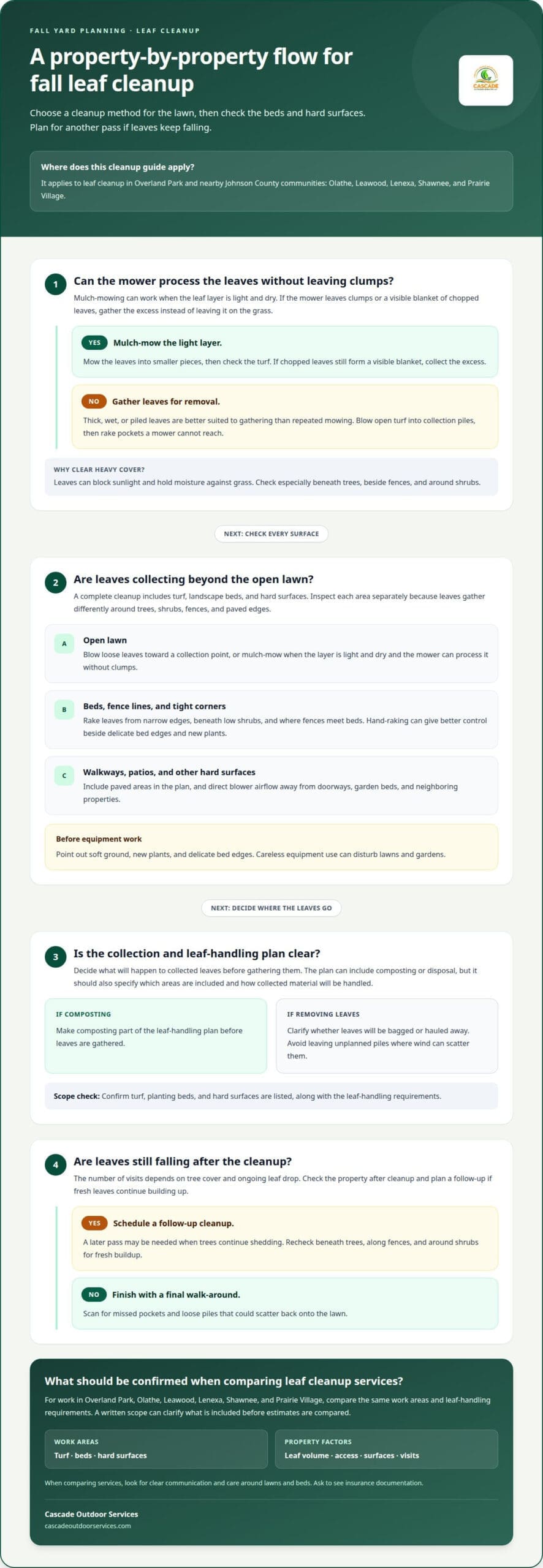
Decide where leaves will go before gathering them. Piles left beside a driveway can scatter in the wind, and bagged leaves need a clear collection or disposal plan. If leaves will be hauled away, define which areas are included and whether beds and paved surfaces are part of the work. This helps prevent a cleared lawn from leaving a stack of leaves beside the curb.
What leaf removal services are available in Overland Park, such as blowing, raking, mulching, and haul-away? Leaves can be blown or raked into collection piles, mulch-mowed when the layer is light, or bagged and hauled away. The right combination depends on the property’s coverage and features.
Is Mulch-Mowing Leaves Better Than Removing Them?
Mulch-mowing chops leaves into smaller pieces and leaves them on the turf. It can work with a light, dry layer that a mower can process without leaving clumps. Check the lawn afterward: if chopped leaves still form a visible blanket, gather the excess rather than leaving it across the grass.
Removal is better suited to thick, wet, or piled leaves. Under a dense oak canopy, for example, leaves can be raked or blown into collection piles instead of repeatedly mowed over. Choose the approach based on how much leaf material remains on the turf after mowing.
What Happens If Leaves Stay on Grass?
Leaves left on Overland Park lawns can block sunlight and trap moisture. Rain or snow can press them against the grass, contributing to thin or unhealthy areas. Check beneath trees and along lawn edges, where leaves can drift under shrubs or against fences.
After blowing or raking, scan the turf for missed pockets and gather loose piles so wind does not scatter them back onto the lawn. Check fence lines and beneath low branches, where leaves can be easy to miss. A final walk around the property helps identify spots that need another pass.
Clearing lawns, landscape beds, and hard surfaces
A complete cleanup addresses leaves on turf, in planting beds, and across walkways or patios. In Overland Park, inspect each surface separately because leaves collect differently around trees, shrubs, fences, and paved edges.
On lawns, gather leaves from open turf and check where wind pushes them into corners. Leaves can collect beside fences, beneath low branches, and along landscape-bed edges. Focusing only on the middle of the lawn can leave these pockets behind. After the main pass, check the perimeter, near shrubs, and beneath play equipment.
Landscape beds need a careful touch. Leaves settle around perennial stems, shrubs, and ground cover, where aggressive raking can disturb plants or pull up mulch. Use a gentle hand rake or controlled blowing to lift leaves without scraping soil or pushing debris into dense plantings. Check around tree trunks and bed borders, too. Leaves piled against a shrub can hide smaller plants and leave the bed looking unfinished.
Hard surfaces need a separate cleanup pass. Leaves can collect in corners and along joints on a front walk, driveway, patio, or steps. Blow or sweep debris toward a collection point, then check edges where leaves may be trapped against a foundation or garden border. Clear the full paved area rather than shifting leaves from one section to another, including the path from the driveway to the entrance.
On sloped lawns or near retaining walls, keep leaves away from drains and low spots. A pile beside a grate can obstruct the opening, while wet leaves may cling to paving. Place collection piles somewhere accessible and clear of beds and walkways. Then check nearby surfaces for leaves displaced during cleanup. Inspect each area rather than assuming it is clear because the lawn looks tidy.
On an Overland Park property with many oak trees, leaf volume can make cleanup a larger task across turf, beds, and paving. The order matters: clear leaves from beds and edges, gather them from the lawn, then finish hard surfaces and check corners. This sequence helps prevent debris from landing on areas already cleared. A final look from the front walk can reveal missed strips beside the driveway or beneath shrubs.
Define the work area before cleanup begins. Include the lawn, landscape beds, front walk, driveway, and patio wherever they need attention. A clear scope makes it easier to see what was covered and where leaves still need collecting. Point out new plantings and narrow paths so the crew can account for them while clearing each surface.
The article states that a truck can clear an oak-heavy Overland Park lot in a couple of hours. Treat that as an expectation for the described lot, not a guarantee for every property. A defined scope keeps attention on the lawn, beds, and hard surfaces that need clearing. Before work begins, confirm which areas are included and inspect each one when cleanup is complete.
Leaf disposal and composting
Choose a destination for collected leaves before cleanup starts. In Overland Park, homeowners can compost leaves, keep suitable leaves for garden use, or arrange removal from the property. The right option depends on leaf condition, storage space, and the amount the yard produces. A small pile of dry leaves, for example, may fit a home compost area, while a larger volume needs a clear collection plan.
Composting turns leaves into organic material that can later be used in garden beds. Shred dry leaves with a mower or leaf shredder, then add them to a compost pile. Smaller pieces break down more readily than whole leaves. Mix in green garden material, such as fresh plant trimmings, rather than making a pile of leaves alone. Keep the pile damp, not waterlogged, and turn it occasionally to introduce air.
Leaf condition matters. Dry, healthy leaves are easier to shred and handle than wet leaves packed together after rain. Set aside leaves with obvious disease or pest damage instead of adding them to a home compost pile. Keep the pile accessible for adding material and turning it. A tucked-away corner near a garden can work if it does not block a path or interfere with routine yard care.
Not every yard has room for composting. If leaves are being bagged or gathered for removal, keep piles together in an accessible area and separate them from branches, stones, and other debris. This makes collection clearer and prevents unwanted material from getting mixed in. You can also keep some leaves for composting and set aside the rest for removal, giving each pile a clear destination.
Before winter, inspect the lawn and beds after collecting leaves. Look for loose piles that could scatter, leaves trapped beneath shrubs, and debris still on paved areas. If you compost at home, add leaves as they fall and turn the pile to mix fresh material with older layers. If leaves are leaving the property, define which piles and areas are included in the cleanup plan.
On an Overland Park property with mature trees, the volume of leaves can change as different trees shed. Keep compost space available through the season, or plan collection around the amount your yard produces. A practical disposal plan prevents collected leaves from becoming a new pile beside the driveway or taking over a landscape bed.
Leaf removal in Overland Park and nearby Kansas and Missouri communities
Leaf-removal timing varies across Overland Park and nearby Johnson County neighborhoods because yards have different tree mixes, shade, and landscape layouts. Watch where leaves collect on your property instead of relying on one schedule for every street.
Which leaf removal companies serve Overland Park, KS? Cascade Outdoor Services serves Overland Park and nearby Johnson County communities, including Olathe, Leawood, Lenexa, Shawnee, and Prairie Village. Define the work areas that need attention so the cleanup scope reflects your property.
Mature trees and newer plantings create different cleanup needs across Overland Park. A property with trees lining the front walk may need attention along the pavement, while a backyard bordered by shrubs can collect leaves inside the beds. Before arranging cleanup, map the lawn, planting areas, driveway, paths, and narrow access points that could affect how the crew reaches the leaves.
Homeowners in Olathe, Leawood, Lenexa, Shawnee, and Prairie Village can use the same property-first approach. Note where leaves collect most heavily and whether those areas are easy to reach. A corner lot beside a wooded area, for example, may gather windblown leaves along its fence even when the center of the lawn looks clear. Specific observations help define the cleanup scope.
In Overland Park, peak leaf drop typically runs from the last week of October through mid-November. Maples often drop within a two-week window in late October, while pin oaks may shed into late November and December. A lighter-canopy lot may need one visit in late November, while a heavy oak canopy may call for two visits, including a later pass after pin oaks drop their leaves. Use these patterns as a guide, then assess what remains on your property.
When arranging a visit in Johnson County, identify the areas to clear and how the gathered leaves should be handled. Specify, for example, whether the crew should collect leaves beside a fence, within planting beds, or along the front walk. If you want to keep some leaves for composting, distinguish those piles from material intended for removal. A defined scope makes estimates easier to compare and clarifies what the planned cleanup covers.
Before winter, homeowners can make a final walk around the property and note remaining leaf buildup, access concerns, and areas that need another pass. This check is especially useful where trees continue shedding after the main drop. For Johnson County fall cleanup options, review outdoor maintenance services and consider which areas of your property belong in the cleanup plan.
Maples in Overland Park typically drop their leaves in a two-week window in late October, while pin oaks can continue shedding into late November and December. The article recommends two leaf-removal visits for lots with a heavy oak canopy and describes fall leaf-removal packages with two or three visits.
The article recommends arranging leaf removal before the first snow to avoid leftover yard debris in spring. Use these timing points to plan a later check when oak leaves remain, rather than assuming an earlier cleanup will cover the entire season.
Cascade Outdoor Services: Timber Retaining Walls
Cascade Outdoor Services helps Overland Park homeowners address retaining-wall and drainage concerns uncovered during fall yard cleanup. If clearing leaves reveals soil washing away beside a slope, a retaining wall may help manage the grade. Pooling water near a wall may call for a drainage solution instead.
Cascade offers timber, segmental block, and natural stone retaining walls, along with French drains. The right approach depends on the slope, soil movement, and where water flows across the property. For related grading and drainage services, consider how runoff affects the landscape around the wall.
If fall cleanup reveals a retaining-wall or drainage concern at your Overland Park property, contact Cascade Outdoor Services to discuss the project.
Ready to Plan Your Fall Cleanup?
To plan fall cleanup, note which parts of your property need attention, how you want collected leaves handled, and whether continued leaf drop may call for another visit. These details help shape a practical plan for your home in Overland Park or elsewhere in Johnson County, including Olathe, Leawood, Lenexa, Shawnee, and Prairie Village.
If cleanup reveals a slope that needs support, Cascade Outdoor Services builds timber, segmental block, and natural stone retaining walls. For fall cleanup and seasonal property maintenance, explore the relevant service details and decide what suits your yard.
Contact Cascade Outdoor Services about fall cleanup and take the next step toward a cared-for outdoor space. A well-planned leaf removal service in Overland Park, KS can help you head into the changing season with a clear plan for your property.
Frequently Asked Questions
Ready to Get the Leaves Off Your Overland Park Lawn?
Start by listing the areas you want cleared and making access straightforward for the crew. Move vehicles from the driveway, pick up hoses and toys, and point out delicate plants or narrow gates before work begins. If you’re arranging a leaf removal service in Overland Park, KS, these details help define the work area and reduce interruptions during cleanup. You can review fall cleanup services for your property.
Do Overland Park Leaf Removal Services Include Disposal Fees and Cleanup?
Disposal and final cleanup depend on the work described in the estimate, so do not assume hauling is included. Check whether the scope covers collecting leaves from each requested area, removing them from the property, and clearing debris from walks or driveways. Leaf volume, access, and handling method affect the project scope. Cascade Outdoor Services provides on-site consultations and detailed estimates based on the work and property conditions.