
Gutter cleaning and fall leaf cleanup address different parts of a property, so don’t assume a cleanup visit includes gutters. For commercial fall cleanup in Lenexa, KS, start with the grounds: leaf removal, bed cleanup, and any mulch refresh or winter preparation the site needs.
K-State Research and Extension offers horticultural timing guidance for seasonal planning. Since leaf drop can vary from year to year, plan cleanup visits around the conditions at the property and adjust as needed.
This guide explains what commercial and HOA cleanup can include, how to plan visits around leaf drop, and how to prepare properties for winter. Cascade Outdoor Services serves Johnson County, Kansas, including Overland Park, Olathe, Leawood, Lenexa, Shawnee, and Prairie Village.
Key Takeaways
- Plan leaf removal around how much tree cover the property has and how leaves collect across the grounds.
- Decide whether a one-time cleanup or recurring visits better fit the site’s leaf-drop pattern and maintenance needs.
- Keep gutter cleaning on the schedule as a separate task from landscape cleanup.
- Give sloped areas, swales, and drainage paths attention so gathered leaves don’t obstruct water flow.
- Match the cleanup plan to the property, whether it serves residents, an HOA, or a commercial site.
Truck-mounted leaf vacuum and yard-waste hauling
In Lenexa, curbside leaf placement and collection follow City of Lenexa instructions, while commercial hauling is a separate disposal route. A site cleanup plan should show how crews will move leaves from lawns, beds, and walkways to a collection point.
Truck-mounted vacuums collect consolidated piles in areas vehicles can reach. Equipment and safety plans should account for site access, pedestrians, parked vehicles, and active routes.
How do leaf blowing and vacuuming work?
Crews can use blowers to move leaves from open turf and paved areas into collection rows, then vacuum the piles. A truck-mounted vacuum works well in accessible areas, while tighter spaces may need another collection method. The equipment plan should account for pedestrians, parked vehicles, and entrances. For example, crews can clear a path beside an office entrance before directing debris away from it.
Before work starts, crews can identify active parking lanes and walkways, then plan the order of work. This keeps vehicle movement and leaf collection organized across the site.
How are leaves removed from landscape beds?
Landscape beds need careful handling around shrubs and perennial plants. Crews can lift or rake leaves from plantings and bed edges, then gather the debris for removal. At a Lenexa office, for example, cleanup may include beds beside the sidewalk and plantings near the building entrance.
A final pass can collect loose leaves that blowing has moved into sheltered corners or between plants. This allows crews to remove debris without treating planted areas like open turf.
How are curbside leaf piles picked up and hauled?
Curbside pickup follows City of Lenexa instructions for pile placement and collection. Commercial hauling instead gathers leaves from designated areas on the property and transports them for disposal. Keep the two collection plans distinct so private work areas do not conflict with curbside pickup.
A practical sequence is to clear the landscape, form collection rows, vacuum accessible piles, and haul the debris. The site plan should identify truck access and turning areas before work begins.
Leaf accumulation varies by property, so plan cleanup around the leaves present on the site rather than a set calendar date. Properties with heavy tree cover may need multiple visits; lighter sites may need a later cleanup. Checking actual leaf accumulation helps avoid removing leaves before more have fallen.
For horticultural timing guidance, consult K-State Research and Extension. Plan the cleanup around conditions at the property, and adjust the work as leaf accumulation changes.
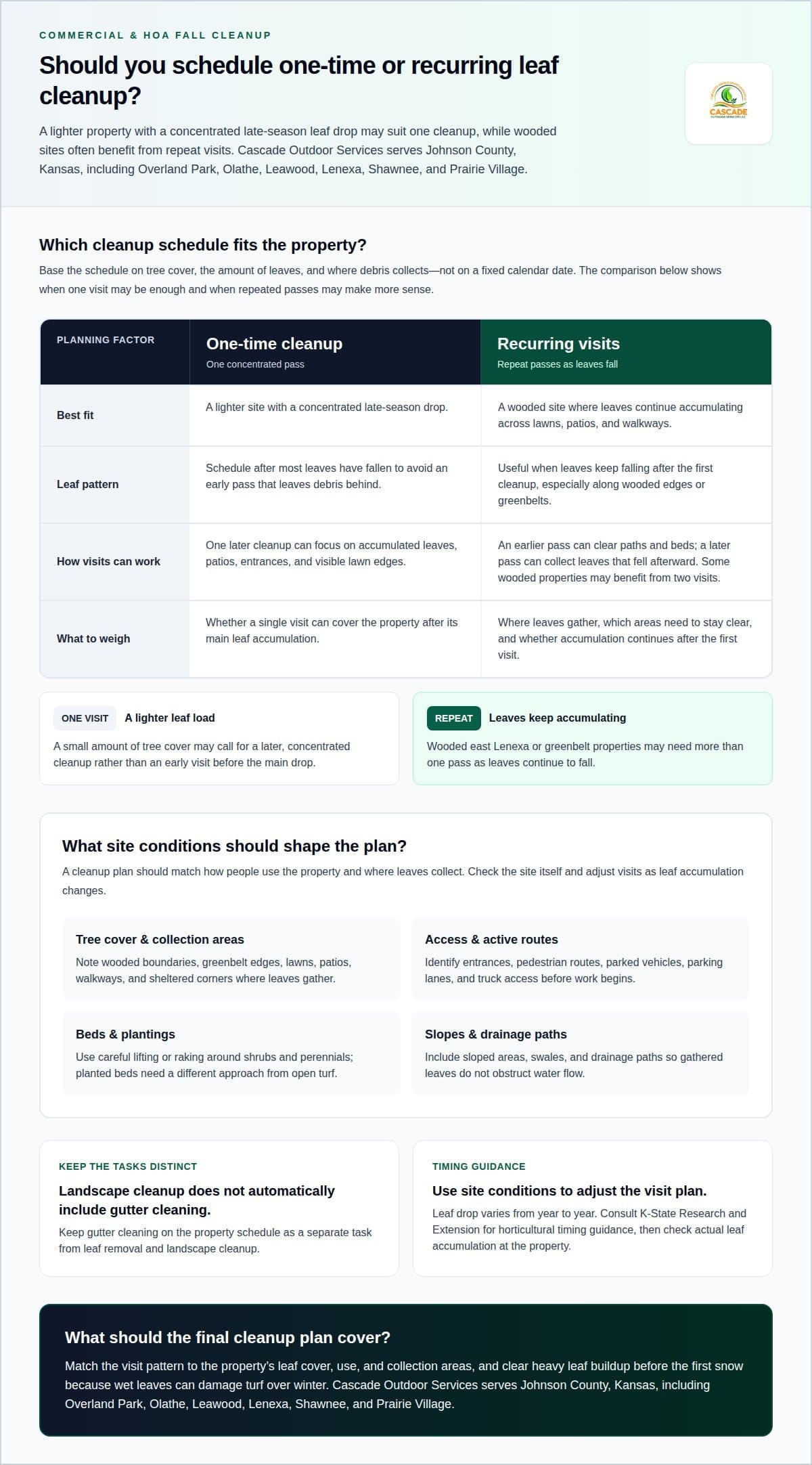
Should you schedule one-time cleanups or recurring visits?
A one-time cleanup suits a Lenexa property with lighter leaf coverage and a concentrated late-season drop. Wooded sites often need repeat visits because leaves continue accumulating across lawns, patios, and walkways.
Choose a schedule based on tree cover, leaf volume, and where debris gathers. A lighter lot may need one late-season removal, while wooded east Lenexa or greenbelt properties may benefit from two visits. The distinction is practical: one visit handles an accumulated layer, while repeat visits address leaves as they continue to fall.
For a wooded property, an earlier visit can clear leaves from paths and beds. A later pass can collect what falls afterward. Leaf drop varies by property, so a single early visit may leave debris behind.
A lighter property may suit one cleanup after most leaves have fallen. This concentrates removal instead of scheduling a pass before the main accumulation. The final cleanup can also cover patios, entrances, and visible lawn edges, where leaves gather even with limited tree cover.
Use the property’s layout to decide whether repeat service adds value. A site beside a wooded greenbelt may collect leaves along one boundary while its central lawn stays relatively clear. An earlier visit can focus on that edge, with a later pass covering broader areas.
K-State Research and Extension can guide horticultural timing, while actual leaf accumulation helps shape the cleanup schedule. Clear heavy leaf buildup before the first snow, since wet leaves can damage turf over winter. A final pass is still useful when an earlier visit kept paths and patios clear.
For a property manager, organize the schedule around three checks: where leaves gather, which areas need to stay clear, and whether leaves continue falling after the first cleanup. A Lenexa office with a wooded edge may need a different plan from an open site. Match visits to those conditions rather than treating every property alike.
Service for residential properties, HOAs, and commercial sites
Residential properties, HOA common areas, and commercial sites need cleanup plans shaped around their use and layout. In Lenexa, the priority may be a homeowner’s lawn, shared neighborhood walkways, or an office entrance.
For each property, define the areas to clear, how residents or visitors use them, and where leaves gather. These details shape the scope of a leaf removal service.
Which property types need fall cleanup?
Residential properties often need attention across lawns, planting beds, patios, and entry paths. An HOA plan also accounts for shared spaces, such as paths between homes, gathering areas, and common lawns.
Commercial properties may prioritize entrances, sidewalks, parking edges, and landscaped areas visible to customers. For example, an office with a wooded boundary has different cleanup needs from a small storefront with paved frontage.
In each case, the service area should reflect how people use the site. A residential lawn may be the main focus, while an HOA may need shared paths cleared across several common areas.
How should commercial cleanup providers be assessed?
Commercial fall cleanup in Lenexa can vary by equipment, scheduling, and the areas included in a visit. Look for a plan that identifies leaf removal locations, access needs, debris handling, and whether visits can recur through the season.
A useful scope names the spaces involved, such as lawn edges, landscape beds, walkways, and entrances. It should also distinguish private-property cleanup from curbside collection handled under City of Lenexa instructions.
HOA boards and property managers can organize a site plan around three practical details: the areas to clear, the access routes crews need, and the places that must remain usable during work. A residential plan might prioritize the front lawn and patio. An office plan might focus on its entrance and pedestrian route.
Visit frequency depends on tree cover and where leaves gather. The appropriate schedule can vary by property, so consider leaf accumulation and the areas that need to remain usable. For an HOA, visits can address shared areas as leaves accumulate; for a commercial site, the schedule can prioritize customer-facing paths and entrances.
Good planning also separates seasonal cleanup from routine lawn care. For example, a property manager can schedule fall removal around leaf accumulation, then review whether beds and paths need attention before winter. While outdoor teams handle seasonal groundskeeping, complex commercial facility operations may also rely on specialised remediation providers such as AustDecon for biohazard and forensic restorative cleaning. A clear scope helps residents, staff, and visitors understand which areas the seasonal work covers.
Cleanup on sloped lots, swales, and drainage areas
On sloped Lenexa lots, wind and rain can pile leaves into drifts. A thorough leaf cleanup should address those accumulations as well as swales and other areas that carry runoff.
Slopes move leaves downhill, where they can gather against fences, planting beds, or the lower edge of a lawn. Crews can work from the upper slope toward the collection area, clearing the path in sections. This makes it easier to spot debris lodged beside a walkway or behind a landscape feature.
Swales need careful attention because leaves can gather where water flows across the property. A cleanup pass can remove debris from the channel and its edges without shifting soil or changing the swale’s shape. For example, an HOA swale beside a shared lawn may need a clear route along its length, not just a tidy entrance.
Drainage structures also need to remain visible and clear of gathered leaves. During cleanup, crews can remove debris around accessible grates and catch basins, then collect it without pushing it into openings. On a commercial site, this matters near parking areas, where leaves may gather along curb lines and at low points.
Sloped turf calls for a different sequence than flat lawn mowing. Crews can first gather loose leaves and clear concentrated drifts, then handle remaining lawn debris. This helps prevent mowing from spreading a heavy layer into nearby beds or toward a swale. The property’s slope and access points determine how equipment and debris move across the site.
Across Lenexa and Olathe, a property’s drainage pattern shapes where a final leaf removal pass should focus. A site visit can identify low spots, swale edges, and places where runoff crosses walkways. Where the issue involves grading or drainage rather than seasonal debris alone, grading and drainage services address the underlying property conditions.
A practical cleanup sequence is to locate leaf drifts, clear the swale and accessible drainage openings, then collect debris from the slope and adjacent lawn. Crews can finish by checking the areas where leaves were moved or gathered. That final pass helps ensure debris has not simply shifted from a slope onto a path or into a planting bed.
For commercial properties and HOAs, the work plan should identify steep sections, shared paths, and drainage areas before crews begin. A marked site map can show which swales cross common space and where vehicles should avoid soft ground. These details help direct cleanup across the property without confusing seasonal leaf removal with drainage-system repairs.
Which companies offer commercial fall cleanup in Lenexa, KS?
Cascade Outdoor Services provides commercial fall cleanup in Lenexa for businesses and HOAs. A suitable plan defines the areas covered, visit schedule, equipment, and how collected leaves will be handled.
Start with the property’s needs, not a generic service label. An office beside a wooded greenbelt may need repeated leaf removal, while a small storefront may focus on its entrance, lawn edges, and parking perimeter. The scope should identify each area so crews know where cleanup begins and ends.
Visit frequency is another useful consideration. Properties with heavy tree coverage may need recurring leaf removal, while lighter lots may need fewer visits. The schedule should account for the site’s tree cover and ongoing leaf accumulation, rather than assuming every property follows the same pattern.
Look for a defined approach to collection and hauling. For example, a plan can distinguish leaves gathered from landscaped areas from piles placed curbside under City of Lenexa instructions. It can also show how crews will reach interior courtyards, shared paths, and areas behind buildings. These details matter when trucks cannot access every part of a commercial property.
For an HOA, the scope can map shared lawns, entrances, and walkways across the community. A commercial property may prioritize customer-facing paths and areas near building entrances. Naming these locations helps managers understand what each visit covers and identify areas needing attention after more leaves fall.
Before scheduling, organize the decision around three points:
- Coverage: Identify lawns, beds, paths, entrances, and drainage areas included in the cleanup.
- Timing: Match one-time or recurring visits to tree cover and leaf accumulation.
- Collection: Establish where debris will be gathered and whether it will be hauled away.
A clear scope makes commercial fall cleanup easier to coordinate with property operations. For instance, an HOA can share the schedule with residents, while an office manager can plan around entrances and pedestrian routes. For property managers who oversee multi-family communities or commercial assets and need broader site safety strategies alongside groundskeeping, commercial security providers like rangerprotection.com offer examples of how dedicated patrols keep facilities protected. Plan fall cleanup for your Lenexa property around its landscape, access, and seasonal leaf load.
Recurring fall leaf removal can suit some Lenexa properties. For a commercial manager, the visit schedule is only a starting point: define which grounds each visit covers and how the timing fits the property’s leaf accumulation. Compare the plan with the site’s tree cover, access points, and priority areas rather than choosing by visit count alone. Specify whether every visit covers the same locations or focuses on areas where leaves gather most.
Before choosing a schedule, identify the entrances, shared paths, landscaped areas, and parking edges that matter to daily operations. Clarify how crews will reach those locations and where collected leaves will be gathered or hauled. These details help determine whether the visit schedule suits an office, storefront, or HOA property. Managers can also use the agreed scope to explain which areas are included and identify locations that may need attention as leaves continue to fall. A clear discussion of coverage, timing, and collection makes it easier to match the plan to the property’s actual needs.
Cascade Outdoor Services: Spring and Fall Cleanups
Cascade Outdoor Services provides Spring and Fall Cleanups and Leaf Removal and Fall Yard Cleanup for properties preparing for winter. For a Lenexa commercial site or HOA, this work can address accumulated leaves and seasonal debris across the grounds.
A cleanup plan can reflect the property’s tree cover, shared paths, lawn areas, and landscape beds. Properties with heavier leaf accumulation may need more than one visit, while lighter sites may suit a single later cleanup.
Cascade Outdoor Services serves Johnson County, including Lenexa, Overland Park, Olathe, Leawood, Shawnee, and Prairie Village. To discuss fall cleanup for your property, contact Cascade Outdoor Services.
Set Your Property Up for Winter
A clear fall plan gives property managers and HOA boards a practical starting point for winter maintenance. Use the next step to define which outdoor areas matter most to residents, employees, and visitors, then align the cleanup scope with those priorities.
For commercial fall cleanup in Lenexa, KS, a focused plan connects seasonal upkeep with how each property is used. Cascade Outdoor Services provides Spring and Fall Cleanups and Leaf Removal and Fall Yard Cleanup for properties in Johnson County, including Lenexa, Overland Park, Olathe, Leawood, Shawnee, and Prairie Village.
Share the property’s priorities and the areas that need attention to start a useful conversation. Contact Cascade Outdoor Services to discuss cleanup and take the next step toward a well-kept property through the seasonal transition.
Frequently Asked Questions
Do you offer one-time leaf removal in Lenexa?
Yes, Cascade Outdoor Services offers Leaf Removal and Fall Yard Cleanup, and a one-time visit can be scoped for a Lenexa property. It suits a site needing one focused pass rather than a recurring seasonal schedule. For example, a property manager might prioritize one courtyard, building frontage, or shared lawn area. Defining the included areas keeps the visit focused.
What do you do with the leaves after you remove them?
Leaves are gathered from the areas named in the cleanup scope. A site plan should identify where debris will go, such as an agreed collection point or off-site hauling, so piles do not obstruct entrances, accessible routes, or parking. For an HOA, this distinction also helps separate private-property debris from curbside collection. Include the handling plan in the work scope before service begins.
What services are included in commercial fall cleanup in Lenexa?
Commercial fall cleanup can include leaf removal, seasonal debris cleanup, and garden-bed detailing. The work may also cover outdoor walkways and patio areas when they are included in the property scope. Distinguish grounds cleanup from roof-gutter cleaning: leaves in landscape beds and on paths concern the grounds, while gutters need a separate scope. This keeps expectations clear for property managers and site users.
When should commercial properties in Lenexa schedule fall cleanup?
Schedule the first visit around actual leaf accumulation, then decide whether another pass is needed as leaves continue falling. A Lenexa site with wooded edges may need a different plan from an open commercial lot. Complete the final cleanup before winter conditions limit access, and coordinate around busy entrances or resident events so crews can work through priority areas.
What should property managers include in a commercial fall cleanup contract?
A commercial fall cleanup plan should name the property areas covered, the visit schedule, and how collected debris will be handled. Include site access details, priority entrances, and shared spaces requiring coordination with residents or tenants. For example, an HOA can identify common lawns separately from private yards. Clear boundaries prevent confusion about what a visit includes and help managers coordinate seasonal work.
How do commercial fall cleanup providers in Lenexa compare on services and reviews?
Cleanup plans can differ in equipment, scheduling, debris handling, and the areas covered by each visit. Compare whether a plan identifies leaf-removal locations, access needs, and options for recurring visits; the article provides no basis for comparing reviews.