
Imagine leaning against your deck railing on a warm Johnson County evening, only to feel an unsettling sway beneath your feet. You look down and notice the base of a support post is dark, soft, and crumbling where it meets the soil. This sight often triggers an immediate fear of structural failure and a dread of massive repair bills. Repairing a rotted deck post is about more than just swapping out a piece of lumber; it is about restoring the safety and longevity of your home’s primary exterior retreat.
We understand the frustration of watching the unpredictable Kansas climate take a toll on your property. You deserve a deck that feels as solid as your home’s foundation. In this guide, you will learn how to identify early signs of decay, navigate the cost-benefit of different fixes, and implement drainage solutions that stop rot before it starts. We will also cover specific local requirements, such as the 42 inch frost line depth and permit rules that keep your structure legal and safe. From understanding structural loads to choosing between cedar and pressure-treated wood, we are providing the roadmap for a professional-grade metamorphosis that protects your investment for years to come.
Key Takeaways
- Use the “Screwdriver Test” to quickly identify soft spots at the base of your structure and determine the severity of fungal decay.
- Understand how the “Bathtub Effect” in Johnson County clay soil traps moisture, making proper drainage and grading essential for post longevity.
- Master the “Cut and Replace” method for repairing a rotted deck post by installing standoff bases that elevate wood above standing water.
- Apply the “25% Rule” to decide if a post can be saved or if structural replacement is necessary to maintain a safe load-bearing capacity.
- Transition from structural repair to aesthetic restoration with professional-grade sanding and oil-based penetrating sealants for a lasting finish.
Signs of Deck Post Rot: How to Inspect Your Structure for Safety
Deck post rot is more than just an aesthetic blemish; it is a biological process where fungal organisms consume the cellulose and lignin that give wood its strength. This decay effectively hollows out the structural core of your support system, leaving your deck vulnerable to sudden failure. When you start the process of repairing a rotted deck post, you aren’t just fixing a piece of lumber. You are restoring the load-bearing capacity of a structure that must support thousands of pounds of weight, including your family and guests.
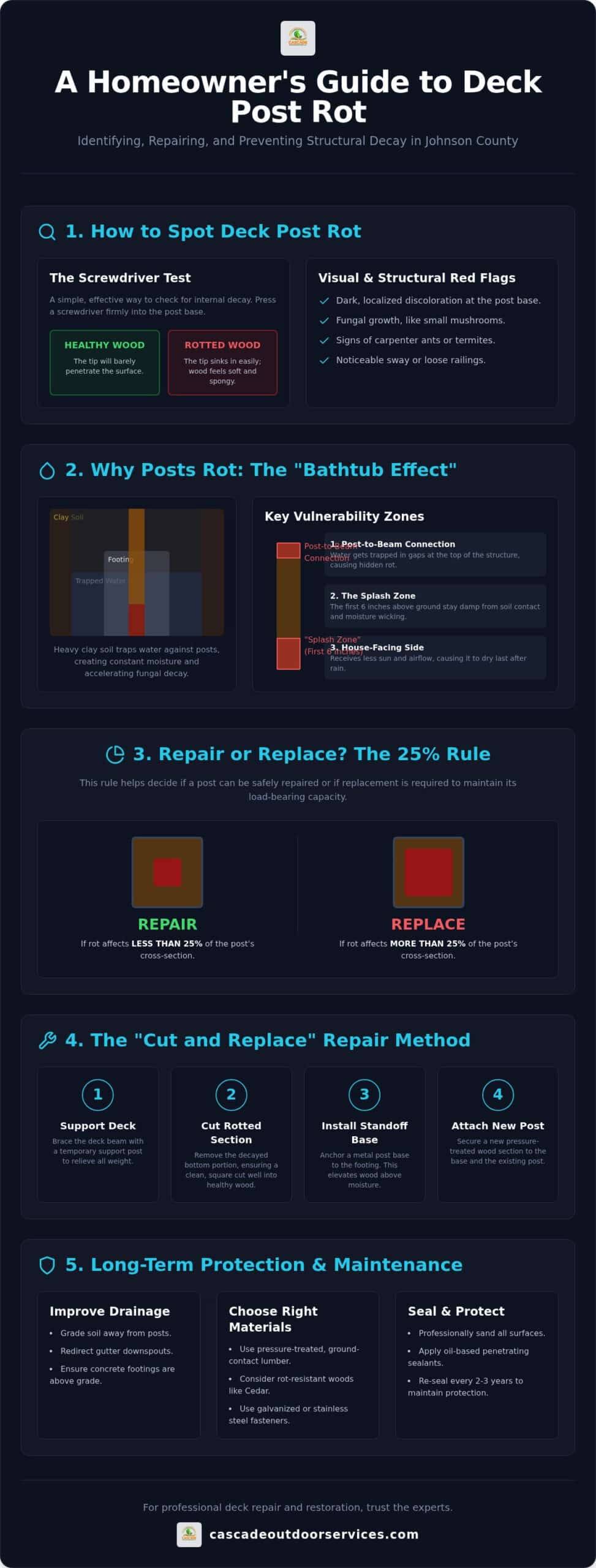
To identify the severity of the damage, use the Screwdriver Test. Take a flathead screwdriver and press the tip firmly into the base of the post where it meets the ground or concrete footing. If the wood is healthy, the tip will barely penetrate the surface. If the screwdriver sinks easily into the grain or if the wood feels soft and spongy, the internal fibers have likely collapsed. You should also watch for visual red flags such as dark, localized discoloration, fungal “fruiting bodies” that look like small mushrooms, or signs of carpenter ants and termites that thrive in softened timber. Structural warning signs often manifest as a noticeable sway when you walk across the deck, loose railings, or posts that appear to lean away from the house.
Where Rot Usually Starts
The most vulnerable area is the “splash zone,” which is the first six inches of the post above the ground. This area stays damp longer due to soil contact and moisture wicking up from the earth. You should also inspect the post-to-beam connections at the top of the structure. Water often gets trapped in the small gaps between the beam and the post, leading to rot that is hidden from view. Don’t forget to check the side of the post facing the house; because this area receives less sunlight and airflow, it is often the last part of the post to dry out after a Kansas storm.
The Difference Between Dry Rot and Wet Rot
Understanding the type of decay is vital for choosing the right wood preservation techniques for future protection. Wet rot is common in our regional climate and occurs when wood is consistently saturated. It typically stays localized to the damp area. Dry rot is a bit of a misnomer because it still requires some moisture to start, but it is far more aggressive. It uses specialized “plumbing” mycelium to transport water from damp areas to dry sections of wood, allowing the fungus to spread across your entire deck frame. Both types of rot require immediate intervention to prevent a full structural metamorphosis from a safe retreat into a hazardous zone.
If you catch these signs early, repairing a rotted deck post is often a straightforward task of stabilization and localized replacement. However, ignoring these symptoms allows the decay to migrate into the joists and ledger boards, leading to much higher repair costs down the road.
Why Deck Posts Rot in Johnson County: The Role of Clay Soil and Drainage
The rich, heavy clay soil characteristic of Johnson County is a double edged sword for homeowners. While it provides a stable base for heavy structures, it also creates what professionals call the “Bathtub Effect.” Because clay is non-porous, it doesn’t allow rainwater to percolate downward. Instead, the excavated area around your concrete footing acts like a bowl, holding water against the wood for days or even weeks after a storm. This constant saturation triggers the fungal decay discussed previously, making repairing a rotted deck post a recurring necessity for properties with poor water management.
Hydrostatic pressure adds another layer of complexity. As the soil becomes saturated, the weight of the water creates a physical force that pushes moisture deep into the wood grain. This pressure is especially damaging during Kansas’s notorious freeze-thaw cycles. When water trapped between the post and the concrete footing freezes, it expands, widening small gaps and breaking the protective seal. Often, the secret culprit behind this moisture is a misplaced gutter downspout that dumps hundreds of gallons of water directly onto a support post during a single heavy rain.
Soil Contact vs. Concrete Footings
One of the most common causes of structural failure is a “buried” post. In many older builds, contractors placed wood directly into the dirt or deep within a concrete sleeve. Modern deck building codes now require posts to be elevated on standoff bases that keep the timber out of standing water. In Johnson County, your footings must reach a minimum depth of 42 inches to stay below the frost line. If your posts are currently sitting in mud due to low footing height, you may need to look into yard drainage solutions to prevent the new lumber from rotting just as quickly as the old.
The Importance of Grading and Runoff
Your deck’s lifespan is often determined by the landscape surrounding it. Negative grading, where the yard slopes toward the house, sends a torrent of runoff directly into the deck’s foundation. Addressing the slope of your yard is just as important as the physical act of repairing a rotted deck post because it tackles the source of the decay. Utilizing grading and drainage services to redirect this flow is the most effective way to ensure your structural repairs last for decades. Implementing a French drain or burying downspout extensions can transform a soggy, rot-prone area into a dry, stable environment. If you aren’t sure where the water is coming from, a professional drainage assessment can identify the root cause before you invest in new timber.
Step-by-Step Methods for Repairing a Rotted Deck Post
Repairing a rotted deck post requires a methodical approach that prioritizes structural stability over quick fixes. Unlike “sistering” methods that often hide decay rather than fixing it, a proper repair involves removing the compromised material entirely. This process begins by isolating the load and ensuring the deck remains level throughout the transformation. By following a structured plan, you can restore the integrity of your structure without the expense of a full deck rebuild.
Bracing the Structure Correctly
Safety is the absolute priority when dealing with a sagging structure. Before you loosen a single bolt or cut into the timber, you must install temporary bracing. Use a secondary 4×4 post and a hydraulic bottle jack to lift the beam slightly, taking the weight off the rotted support. It’s vital to place the base of this temporary support on a solid, flat surface like a large plywood scrap or a concrete pad. Never rely on soft Kansas mud to hold the weight of your deck while you work. Once the load is secured and the deck is slightly elevated, you can safely begin the demolition phase.
Installing a Standoff Post Base
The “Cut and Replace” method is highly effective when the rot is localized to the bottom few inches of the timber. After cutting away the decay and ensuring the remaining wood is solid, you’ll install a standoff post base. A 1-inch standoff is the industry gold standard because it creates a physical air gap between the wood and the concrete footing. This gap prevents the wicking of moisture that leads to recurring rot. Anchor the base into the existing footing using heavy-duty masonry bolts. Before setting the new timber into the bracket, liberally apply a wax-based sealer or wood preservative to the freshly cut end grain to lock out moisture.
In cases where decay has traveled more than a quarter of the way up the grain, a full post replacement is the only safe option. This involves disconnecting the post from the beam and installing a single, solid piece of pressure-treated lumber. Regardless of the method, your hardware choice is critical. Always use G185 hot-dipped galvanized or stainless steel connectors. Standard zinc-plated bolts corrode rapidly when they come into contact with the chemicals in modern pressure-treated wood, which can lead to a secondary structural failure. Taking the time to do this correctly ensures your outdoor space remains a safe, polished retreat for your family.
Repair vs. Replacement: When is a Rotted Post Beyond DIY Help?
Deciding whether to tackle repairing a rotted deck post yourself or to call in a professional often comes down to the scale of the damage. While a single soft spot might seem manageable, structural integrity is binary; it’s either safe or it isn’t. Professionals use the “25% Rule” as a primary benchmark. If more than a quarter of the post’s diameter is soft or crumbling, a simple patch or “cut and replace” fix is no longer sufficient. In these cases, the internal load-bearing capacity is too compromised to trust with a partial repair, and a full replacement is the only responsible path forward.
The complexity increases significantly with the number of affected supports and the height of the structure. If you notice more than two posts showing signs of decay, it often indicates a systemic drainage issue rather than an isolated incident. High elevation or multi-level decks present even greater risks. These structures require precise load calculations and professional engineering to ensure the temporary bracing can handle massive weight shifts during a repair. In Johnson County, local building codes are particularly strict. A building permit is required for any deck construction or replacement, regardless of its size or height. This ensures that structural repairs meet the 42 inch frost line depth and load requirements designed to prevent collapse.
The Hidden Costs of DIY Failure
An improper structural repair is a liability that stays with the property. If a DIY fix fails, the resulting deck collapse can lead to severe injuries and insurance complications. Beyond safety, “handyman” style repairs often become a major red flag during home inspections. Potential buyers and inspectors easily spot non-standard hardware or improper post-to-footing connections, which can derail a home sale or force expensive last-minute corrections. Professional precision ensures the metamorphosis of your deck is both beautiful and legally compliant, protecting your home’s resale value and your peace of mind.
The Benefits of Professional Restoration
Choosing a professional service gives you access to commercial-grade hydraulic jacks and specialized structural hardware that isn’t typically available at local hardware stores. A craftsman’s eye provides a comprehensive evaluation of the entire deck’s health, identifying issues like ledger board rot or joist decay that a homeowner might miss. This holistic approach ensures that repairing a rotted deck post is part of a larger plan for perennial reliability. If you’re ready to ensure your outdoor investment remains a safe, polished retreat, you can learn more through our professional deck restoration guide. For a thorough structural assessment of your property, request a professional deck inspection today.
Long-Term Protection: Deck Restoration and Maintenance Solutions
Repairing a rotted deck post is a vital structural intervention, but it is only the first chapter in your property’s long-term health. Once the load-bearing members are secure, the focus must shift toward preventing the return of moisture and fungal growth. This is where the Cascade Approach differentiates itself. We don’t just fix the break; we integrate structural precision with premium aesthetic refinishing to create a resilient exterior environment that stands up to the elements.
Professional power washing and mechanical sanding are not just about looks. These steps remove gray, dead wood fibers and open the pores of the timber. When you apply high-grade oil-based penetrating sealants, the wood drinks in the protection. Unlike water-based film stains that sit on the surface and eventually crack, oil-based products bond with the wood grain. This creates a flexible barrier that expands and contracts with Kansas City temperature swings. This prevents the wood from checking and splitting, ensuring your new posts don’t suffer the same fate as the old ones.
Perennial reliability requires a small amount of annual diligence. Debris like wet leaves and dirt often get trapped between deck boards, creating stagnant moisture traps right against your support structure. Clearing these gaps allows for proper airflow and evaporation, which is the most effective way to halt the biological process of decay. To help manage the removal of old yard items or debris that can trap moisture near your deck, you can learn more about affordable curbside junk removal services. By combining professional restoration with simple homeowner upkeep, you can extend the lifespan of your deck by another decade or more.
The Metamorphosis of Your Deck
There is a quiet satisfaction in watching a neglected, swaying structure transform into an elevated outdoor retreat. Moving from a functional repair to a polished finish changes how you interact with your home. Professional staining enhances the natural beauty of the wood grain while providing a uniform, sophisticated look. This metamorphosis provides more than just visual appeal; it offers the peace of mind that comes from expert care and a structure that is guaranteed to be safe for your next gathering.
A Seasonal Plan for Johnson County
Our regional climate demands a proactive maintenance schedule. During your spring inspection, look for winter moisture damage or any new soft spots at the post bases. In the fall, focus on removing organic debris that traps moisture against the wood during the snowy months. If you notice a post is beginning to lean or the wood feels spongy, don’t wait for a total failure. Schedule a professional deck evaluation with Cascade Outdoor Services today. We have the specialized tools and local expertise to ensure your outdoor space remains a safe, beautiful extension of your home for years to come.
Secure Your Outdoor Investment for the Future
Protecting your home’s structural integrity starts with a proactive approach to maintenance. Repairing a rotted deck post is about more than just structural safety; it’s about preserving the value of your property and the safety of your family. By identifying early signs of decay and addressing the underlying drainage issues caused by local clay soil, you ensure your deck remains a stable foundation for years of memories.
Since 2016, we have provided Johnson County homeowners with specialized expertise in structural construction and water management. Our team doesn’t just provide a quick fix. We offer a complete metamorphosis through professional power washing, precision sanding, and high-grade staining services. We take pride in our craftsmanship so you don’t have to worry about the physical labor yourself. If you’re ready to move from a swaying structure to an elevated outdoor retreat, Request a Professional Deck Restoration Quote today. Your deck is a vital extension of your home, and it deserves the care of a knowledgeable neighbor who gets the job done right the first time.
Frequently Asked Questions
Can I just use wood filler or epoxy on a rotted deck post?
Wood filler and epoxy products are only suitable for non-structural cosmetic repairs on railings or trim. You should never use them when repairing a rotted deck post that supports a load. These materials don’t restore the structural integrity of the timber. Because they don’t bond with the wood’s internal fibers in a way that supports weight, using them on a support post creates a false sense of safety that could lead to a collapse.
How much does it typically cost to replace a rotted deck post in Johnson County?
The cost for structural repairs in Johnson County varies based on the deck’s height, the number of posts affected, and the condition of existing footings. Factors like the choice between cedar and pressure-treated pine also influence the final investment. For a precise understanding of your project, we recommend a professional evaluation. This assessment ensures you receive a solution tailored to your property’s specific structural needs and local building code requirements.
Is it safe to use my deck if one post is rotted?
It is not safe to use your deck if even one post shows significant rot. A single compromised support shifts the entire structural load onto the remaining posts and the house’s ledger board. This imbalance can lead to a sudden failure or permanent warping of the deck frame. Until the structural integrity is restored, you should limit activity on the deck to prevent injuries or further damage to the structure.
How long does a pressure-treated deck post last before it starts to rot?
With proper maintenance, a pressure-treated pine deck post typically lasts between 10 and 15 years. However, this lifespan can be significantly shorter if the post is in direct contact with wet soil or trapped in non-porous clay. Ongoing care, such as professional staining and ensuring proper drainage, is vital for reaching the maximum life expectancy of the wood. Cedar posts often last slightly longer, usually between 15 and 20 years.
What is the best way to prevent a new deck post from rotting in clay soil?
The most effective way to protect new posts in Johnson County clay is to use a 1-inch standoff base. This hardware elevates the wood above the concrete footing, preventing it from sitting in the “bathtub” of water that clay soil often creates. Additionally, applying a high-grade wood preservative to the end grain before installation provides an extra layer of moisture defense. Combining these mechanical fixes with proper yard grading ensures long-term structural health.
Do I need a permit to repair or replace a single deck post in Overland Park?
Yes, a building permit is required for any deck construction or structural replacement in Overland Park and throughout Johnson County. Local regulations are strict because they ensure all repairs meet safety standards, such as the 42 inch frost line depth. Working with a professional who understands these local codes helps you navigate the permit process and ensures your structural metamorphosis is fully compliant with city safety requirements.
Can poor yard drainage cause my deck posts to rot faster?
Poor yard drainage is often the primary reason homeowners find themselves repairing a rotted deck post prematurely. When water from gutter downspouts or negative grading pools around the foundation, it keeps the support posts in a state of constant saturation. This moisture accelerates fungal growth and wood decay. Installing French drains or burying downspout extensions is an essential part of a comprehensive strategy to protect your outdoor investment from recurring damage.
Should I replace all my deck posts if I find rot in just one?
You don’t always need to replace every post, but finding rot in one is a strong signal to inspect the entire structure. Often, if one post has failed due to poor drainage or age, the others are likely in a similar state of decay. A professional evaluation can determine if the rot is isolated or if a systemic replacement is necessary to ensure the perennial reliability and safety of your entire outdoor living space.