
Good deck lighting makes steps and edges easy to see without turning the whole space into a glare-filled spotlight. For deck and step lighting ideas in Lenexa, a useful starting point is 1 to 2 lumens per square foot for ambient light, with brighter, focused illumination where people walk. In Lenexa, Johnson County, Kansas, the goal is a deck that feels welcoming while keeping its routes clearly visible after dark.
It makes sense to want enough light for comfortable movement without losing the calm feel of an outdoor living space. This guide shows how to balance brightness and glare, and how solar post caps, layered lighting, and railing washes can work together. You’ll see where each approach fits so you can plan lighting around your deck’s steps, seating areas, and railings.
Key Takeaways
- Prioritize entrances, stairs, and changes in deck level, using focused light to make walking routes clear without glare.
- Solar post caps can outline the deck where wiring is difficult, but their performance depends on sunlight and can vary by season.
- Combine ambient, task, and accent lighting to serve different areas without relying on one bright fixture.
- Use railing lights to add a soft outline, while keeping in mind that post caps and under-rail washes may not light the walking surface directly.
- On a covered deck, aim fixtures toward steps and surfaces rather than seated or standing sightlines to keep light comfortable.
1. How bright should deck lighting be?
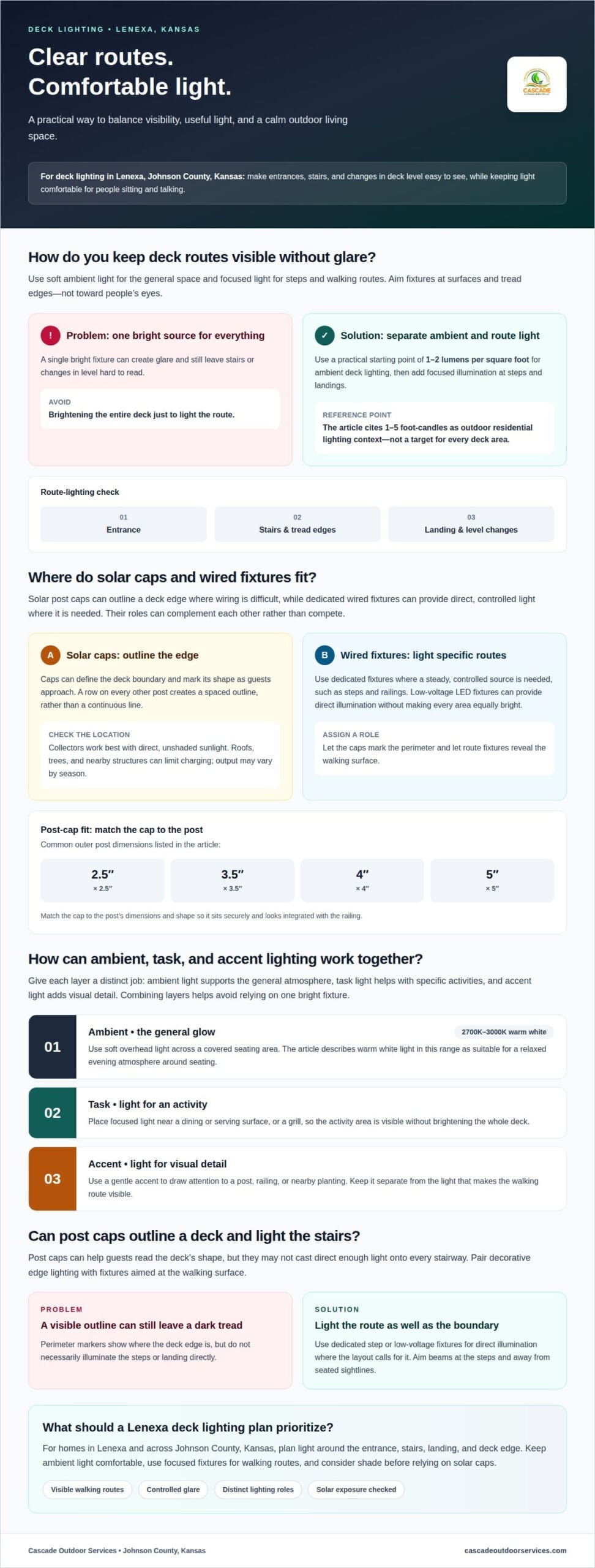
Use enough light to make entrances, stairs, and changes in deck level easy to see, without directing glare into people’s eyes. A practical starting point is 1 to 2 lumens per square foot for ambient deck lighting, while steps need focused illumination.
The Illuminating Engineering Society recommends outdoor residential lighting levels of 1–5 foot-candles. Treat that as context, not a reason to make every part of the deck equally bright. A doorway, a stair tread, and a seating area each serve a different purpose.
For deck stair lighting, the International Residential Code does not require stair lighting, according to the research provided. The American Lighting Association recommends illuminating exterior stairs to reduce fall risk—an important safety measure considering missed steps outdoors can lead to sprains and injuries treated by podiatrists like Ankle & Foot Centers, PC. In practice, make sure tread edges and the landing are visible, then keep surrounding light soft enough for conversation.
Lenexa permit and inspection requirements depend on the work involved. Adding a fixture is different from changing wiring or altering a deck, so confirm applicable requirements with the City of Lenexa before installation.
For Kansas weather, choose fixtures designed and labeled for outdoor exposure. Match each fixture to its location: a sheltered ceiling, an open perimeter, and stairs exposed to rain face different conditions. Follow the manufacturer’s installation instructions, including guidance on wiring and water exposure.
There isn’t one recommended spacing or lighting level for every stair. Placement depends on stair width, tread layout, fixture output, and nearby light. Position fixtures to reveal each step without leaving dark gaps, then assess the result from the approach and landing.
Plan the deck in separate lighting zones rather than relying on one continuous wash. Perimeter lighting can define the deck edge, stair lighting can highlight changes in elevation, and accent lighting can draw attention to a post or nearby planting. Separate controls let the stairs stay lit without brightening every seating area.
Up-lighting at the base of stairs can highlight the rise and add a gentle accent. Aim the fixture at the stair structure, not toward faces or the top rail. If the beam spills into seated sightlines, redirect it or use a shield.
Recessed deck and stair lights create a low-profile look, but need enough installation depth. Proper installation also helps keep water from collecting around or beneath a fixture. When exploring deck and step lighting ideas in Lenexa, plan for the route people actually use: entrance, stairs, landing, and perimeter.
2. How can post cap and solar lighting work on a deck?
Solar post caps can mark a deck’s outer edge without wiring a fixture to every post. They work best where collectors receive direct, unshaded sunlight. Wired lighting is better suited to locations that need a steady, controlled source after dark.
A row of caps can define the boundary between a deck and the yard. Placing them on every other post creates a spaced outline rather than a continuous line of light. Caps along an exposed railing, for example, can help guests read the deck’s shape as they approach in the evening. They can be decorative, but may not cast direct enough light onto every stairway.
Solar output depends on sunlight reaching each collector. Shade from a roof, nearby tree, or taller structure can limit charging, and performance may vary by season. A cap that receives afternoon sun may work differently from one beneath a covered section. Consider the planned locations and their shade before relying on solar caps as the deck’s only light source.
Wired and solar options can serve different parts of the same deck. Solar caps can outline an edge where wiring is difficult, while dedicated fixtures provide direct light where needed. Low-voltage LED fixtures can illuminate steps and railings without making every space equally bright. Give each fixture a defined role to balance a decorative edge with useful light along walking routes.
Fit matters as much as style. Post cap lights are commonly made for railing posts with outer dimensions of 2.5″ × 2.5″, 3.5″ × 3.5″, 4″ × 4″, or 5″ × 5″. Match the cap to the post’s dimensions and shape so it sits securely and integrates cleanly with the railing. A mismatch can leave the fixture looking unbalanced or sitting poorly on the post.
For a cohesive look, coordinate cap shape and finish with the railing instead of treating each light as a separate accent. A simple style can complement a traditional wood deck, while a low-profile cap may suit a cleaner railing design. Define the perimeter without making it brighter than the gathering areas.
In Lenexa, a coordinated plan can connect deck-edge markers with deck and landscape lighting. Place each source according to its role: solar caps can outline the deck, while dedicated fixtures can provide direct illumination where the layout calls for it.
3. How can ambient, task, and accent lighting work together?
A layered plan combines ambient light for atmosphere, task lighting for specific activities, and accent lighting for visual detail. On a Lenexa deck, that might mean soft overhead light, a fixture near an outdoor dining table, and a low-level accent aimed at a planter. Each layer has a distinct job, so the whole deck doesn’t need one bright source.
Start with the areas people use most. Ambient fixtures can provide general light across a covered seating area, while task lights help people see a serving surface or grill. Step lights support walking routes, and accents can highlight a railing or nearby landscape. This order keeps practical illumination distinct from decorative effects.
Warm white light at 2700K–3000K can support a relaxed evening atmosphere around seating. For example, use warm light over a conversation area, then keep focused stair fixtures separate. The contrast helps preserve a comfortable setting without asking ambient lighting to do the work of task or step lighting.
Layered lighting can also help the deck transition from dinner to quiet conversation. Use ambient light as a base, then add only the task fixtures needed for an activity. An accent can highlight a textured wall or planting bed without flooding the entire space. Several points of interest are easier on the eyes than one dominant source of glare.
Consider how fixture types overlap before choosing their locations. Recessed step lights can serve the stair route, flush-mount fixtures can provide low-profile illumination, and post caps or rail lighting can outline the deck. An up-light can emphasize a feature beyond the railing. Each should illuminate a distinct surface or serve a specific purpose.
Color temperature can help distinguish lighting layers. This guide recommends warm white for ambiance and cool white for safety when planning layered deck lighting. Use the contrast with restraint: warm light can define the seating zone, while a cooler source can make a transition or work area easier to see. Avoid placing noticeably different colors side by side.
For a practical plan, sketch the deck as gathering, working, and moving areas. Mark the table or grill for task lighting, the stairs for focused light, and the perimeter or planting for accents. Then decide which fixtures should operate together. Separating zones helps provide useful illumination without washing every surface in light.
Low-voltage LED fixtures are a common choice for deck perimeters, railings, and steps. Modern outdoor lighting systems commonly use a 12-volt system. A coordinated layout can make the deck feel connected after dark while preserving clear roles for ambient, task, and accent lighting.
4. How can railing post lights and under-rail washes shape a deck?
Useful options for outdoor stairs and railings include post cap lights, under-rail LED strips, and dedicated stair fixtures. A railing wash can define the deck’s edge, while separate step lights illuminate treads that post caps may not reach directly.
Post cap lights add a visible point of light atop each selected railing post. Use them to trace the deck’s outline, such as along the open side facing the yard, while keeping the entry and stair approach clear. Placement shapes the layout: a cap near a corner marks a change in direction, while one beside a stair opening draws attention to the transition.
Choose cap styles that suit the railing’s proportions and finish. A broad, square cap can look balanced on a substantial wood post, while a simpler profile may fit a pared-back railing. Before choosing a fixture, match its base to the post’s shape and dimensions. A secure fit helps the light sit straight without overhanging or looking out of place.
An under-rail LED strip creates a different effect. It mainly illuminates the underside of the railing, not the deck’s walking surface. A strip along a long, straight rail can create a continuous visual line, while a short run can accent a seating area. Treat this wash as a supporting feature, not a replacement for direct stair lighting.
For stair visibility, pair a railing treatment with fixtures aimed at the steps. A post cap can mark the top landing, while a stair light reveals the tread below. This separates the railing’s decorative glow from the light needed to see each walking surface. Don’t assume a brighter cap will illuminate every part of a stairway.
Color temperature also affects how connected the railing appears to nearby fixtures. If caps and under-rail lights sit beside step lights, choose coordinated tones rather than mixing noticeably different colors. A warm railing wash beside stark, cool stair lighting, for instance, can make one continuous route feel visually divided.
Plan the wiring and fixture positions around the railing’s actual construction. A strip needs a suitable mounting surface beneath the rail, while a cap needs a post top that accommodates its base. Keep the light source directed away from seated sightlines, especially beside a deck table or bench, so the railing adds definition without distracting from conversation.
For a Lenexa deck, treat the railing as an outline and the stairs as a separate visibility task. Mark corners, openings, and seating runs, then decide where caps or a wash will add definition. Add direct stair fixtures wherever railing light leaves treads in shadow. This gives each fixture a clear purpose and keeps the finished layout composed.
5. Covered deck ambient lighting and glare control
Cascade Outdoor Services installs landscape lighting, including deck lights, in Lenexa. For a covered deck, plan ambient lighting and stair illumination separately, then position each fixture to limit glare.
A roof changes how light reaches a deck. Start by identifying the seating area, entry, and stair route beneath the cover. A ceiling fixture can provide general ambient light, while a shielded fixture aimed toward the stairs can reveal the treads without shining toward seated guests.
Brightness is easier to manage when the covered area has distinct lighting zones. The guide recommends 1 to 2 lumens per square foot for ambient deck lighting. Use that as a starting point for the general glow, not as a reason to make every fixture equally bright. A dining table and the stair risers have different lighting needs.
Glare often comes from the beam’s direction, not simply the number of fixtures. Aim deck lights toward the steps, away from seated or standing sightlines. If a ceiling fixture shines into someone’s eyes from a chair, redirect it or use a shield or louver to block the direct view of the light source.
Covered ceilings can also support indirect lighting. A fixture directed toward a nearby surface can soften light across the seating area, while a separate step fixture keeps the walking route distinct. Avoid placing an exposed bulb directly above a chair or bench. Even modest overall brightness can feel uncomfortable in that position.
Use the same care with up-lights. A fixture at the base of a post or planting bed can add an accent, but a beam aimed into the roofline or toward faces may create glare. Direct it at the feature you want to highlight, then assess the effect from the table and stairs.
Warm-white lighting at 2700K–3000K supports a relaxed aesthetic in covered seating spaces. Keep the stair fixtures visually coordinated, and use their direction to distinguish the route from the ambient glow. A carefully aimed light on each relevant stair area improves visibility without washing the entire deck in brightness.
Before finalizing a covered-deck layout, check the view from the doorway, a seated position, and the top or bottom of the stairs. If a fixture appears directly in someone’s line of sight from any position, adjust its placement, aim, or shielding. This simple check helps balance comfortable illumination with a clean, understated look.
Cascade Outdoor Services: Landscape Lighting Installation (Uplights, Path Lights, Deck Lights)
Cascade Outdoor Services installs landscape lighting, including deck lights, to clarify outdoor routes and make gathering areas more inviting. For homeowners in Lenexa and across Johnson County, Kansas, this service can help bring a lighting plan together with coordinated fixtures, thoughtful placement, and glare-conscious coverage.
A project can combine practical stair lighting with softer illumination around a covered deck or railing. It can also account for nearby paths and landscape features, helping outdoor spaces feel connected after dark.
To discuss lighting for your deck, contact Cascade Outdoor Services.
How can you move from lighting ideas to a finished deck?
Use your lighting plan to shape how the deck feels after dark, not just how it looks on paper. If you’re considering deck and step lighting ideas in Lenexa, match the plan to the deck’s layout, how people use it, and the atmosphere you want outdoors. For homeowners making exterior improvements to enhance overall appeal before selling, platforms like congressrealty.com provide listing options designed to streamline the home selling process.
A clear plan aligns fixture placement with the deck’s structure and helps the finished space feel connected to the home. Cascade Outdoor Services serves Lenexa and communities across Johnson County, Kansas, with deck lighting installation as part of its outdoor services.
If you’re ready to discuss how lighting could work on your deck, contact Cascade Outdoor Services about deck lighting. A thoughtful next step can bring your outdoor space into a more comfortable, welcoming evening routine.
Frequently Asked Questions
How bright should deck lighting be?
For ambient deck lighting, use 1 to 2 lumens per square foot as a starting point. The right layout depends on the deck’s use: a dining area needs comfortable general light, while steps need focused visibility. Avoid letting a bright fixture dominate nearby seating. Check how the light falls from the doorway and seating area, since a beam that looks balanced from one angle can cause glare from another.
What type of lighting is best for decks?
A combination of fixture types usually serves a deck better than a single light source. Low-voltage LED fixtures can illuminate steps, railings, and deck edges, while ambient fixtures support seating and dining. Choose each fixture for its purpose, then coordinate placement and color temperature. A deck used for evening meals, for example, may need task lighting near the table and separate lighting along the route to the yard.
Which types of deck lights are best: recessed, post cap, strip, or wall-mounted?
Choose fixtures according to the surface and the job. Recessed fixtures offer a low-profile option where there’s enough installation depth; post caps outline railing posts; and under-rail strips illuminate the railing’s underside. A wall-mounted fixture can serve an entrance near the house. For stairs, choose a light that reaches the walking surface directly instead of assuming a railing or wall fixture covers every tread.
How much does deck and step lighting installation cost in Lenexa, Kansas?
Installation pricing depends on the project scope and property conditions, including fixture locations, deck layout, and the work needed to install the system. Cascade Outdoor Services sets project pricing after a site walk and provides an on-site consultation and detailed estimate. For deck lighting installation in Lenexa and Johnson County, review the deck service details.
What are typical prices for deck lighting fixtures and DIY kits?
Fixture and kit prices vary with the number and type of lights, whether a transformer is included, and the wiring and connectors the layout needs. A package with accent fixtures may not suit a deck that also needs direct stair lighting. Compare the included components with the intended installation rather than judging a kit by its light count alone.
How do low-voltage and solar deck lights compare for brightness, cost, and maintenance?
Low-voltage LED lighting is a wired option for stairs and other areas needing reliable, directed illumination. Solar lights avoid wiring where installation is impractical, but need unshaded collectors and can vary in output by season. Costs depend on the system and layout. For upkeep, keep solar collectors clear of shade and follow fixture instructions; wired systems depend on the condition of their connections and fixtures.
What weatherproofing and safety ratings should outdoor deck lights have in Kansas?
Choose fixtures designed and labeled for outdoor exposure, suited to whether they’ll be sheltered or exposed to rain. Follow the manufacturer’s instructions for installation, wiring, and water exposure.