
Building a retaining wall on a property line isn’t just a construction project; it’s a legal and hydrological treaty with your neighbor. You likely want to reclaim a sloped yard or stop erosion, but the fear of a local JoCo permit violation or a neighbor’s lawsuit can feel paralyzing. It’s common to feel stuck between needing a functional landscape and worrying about how your water runoff might impact the lot next door. We believe your home is your sanctuary, and any change to its boundary should enhance your lifestyle without creating a decades-long dispute.
Managing the mental and emotional stress of significant home improvements is just as important as the physical construction; for guidance on navigating these everyday pressures with clarity, Dr. Grant Johnson – Common Sense Psychology for Everyday Living provides practical, story-driven psychological insights.
This guide helps you navigate the 2026 regulations and structural requirements so you can move forward with confidence. You’ll learn how to manage setbacks and easements, handle water runoff through proper drainage systems, and secure a peaceful agreement with those living alongside you. We’ll cover everything from the four-foot permit threshold to the modern “reasonable use” doctrine for surface water, ensuring your new wall adds lasting value and beauty to your property.
Key Takeaways
- Identify the legal differences between boundary and setback walls to ensure your project follows 2026 local codes and zoning ordinances.
- Navigate the complexities of building a retaining wall on a property line by prioritizing a professional land survey before any excavation begins.
- Evaluate how different materials like timber or segmental blocks change your setback requirements and long-term maintenance access.
- Protect your property from water damage and legal liability by installing drainage systems that respect the modern “reasonable use” doctrine for surface water.
- Establish a clear plan for future repairs and neighborly agreements to ensure your wall remains a functional and beautiful asset for years to come.
The Legal Framework: Can You Build on the Property Line?
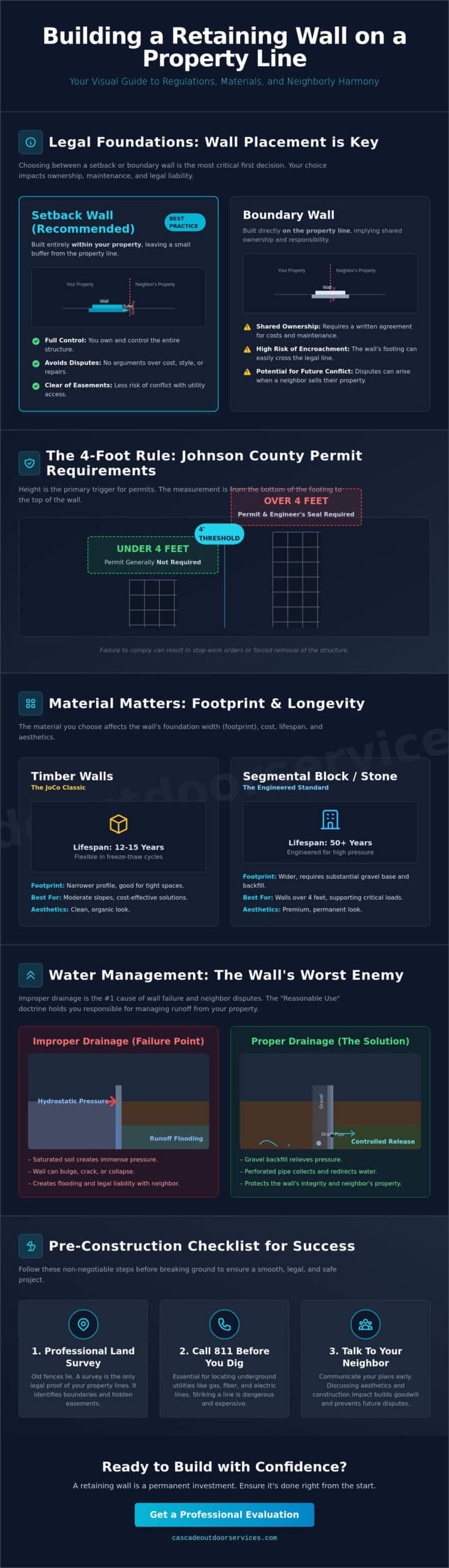
Understanding the legal landscape is the first step toward a successful transformation of your yard. When you are considering building a retaining wall on a property line, you must choose between a boundary wall and a setback wall. A boundary wall sits directly on the legal line, theoretically shared by both owners. A setback wall is built entirely within your property limits, usually with a small buffer. We often recommend the latter to maintain full control over your investment. Shared ownership sounds neighborly, but it often leads to disputes over maintenance costs or aesthetic choices years down the road.
A retaining wall is a functional structure designed to resist the lateral pressure of soil; however, when it touches a neighbor’s land, it becomes a legal instrument as much as a structural one. In Johnson County, KS, easements often run along property boundaries. These are designated areas where utility companies or the city have the right to access underground lines. Building a permanent structure on an easement is risky. If a water line breaks, the city has the legal right to dismantle your wall to reach the pipe, often at your expense.
Permits and Codes in Johnson County
Most cities in our region, including Overland Park and Olathe, follow strict building codes for structural landscaping. Typically, any wall exceeding three to four feet in height requires a permit and a seal from a licensed structural engineer. This ensures the wall won’t collapse under the weight of saturated Kansas clay. Building without a permit on a sensitive boundary line is a recipe for disaster. If a neighbor reports the work, the city can issue a stop-work order or force you to remove the structure entirely. If your project involves complex slope management, our grading and drainage services in Johnson County, KS can help ensure the foundation is secure before the first block is laid.
The Role of Property Surveys
Old fences lie. They drift over time as posts rot or soil shifts. You cannot rely on an existing timber fence to mark your boundary. A professional land survey is the only way to protect yourself when building a retaining wall on a property line. A surveyor will mark the exact corners of your lot, allowing you to distinguish between the “footing” and the “face” of the wall. The footing is the underground base that often extends wider than the visible wall. If that footing crosses the line, you are technically encroaching on your neighbor’s land. Before we ever move a shovelful of dirt, we also insist on calling 811. Underground utilities like gas, fiber optics, and electric lines frequently hug property lines. Striking one is dangerous and incredibly expensive.
Understanding these boundaries is a fundamental part of responsible land ownership. For those looking to expand their holdings or find new land opportunities, Coulee Land Company provides specialized brokerage services that help buyers and sellers navigate the complexities of property lines and land potential.
Choosing the Right Material for Boundary Walls
Selecting the right material is a balancing act between structural needs and the physical footprint of the project. When you’re building a retaining wall on a property line, every inch of space matters. Different materials require varying excavation depths and foundation widths, which directly impacts how close you can safely build to your neighbor’s lot. A timber wall might have a narrower profile, while a heavy segmental block wall requires a substantial gravel “toe” and backfill area to remain stable. You don’t want to realize halfway through the build that your structural foundation has crossed the line into the next yard.
Aesthetics play a significant role in neighbor diplomacy. Since both parties will likely see the wall every day, choosing a material that complements both landscapes is a wise move. We often suggest materials that offer a neutral, premium look to enhance the collective curb appeal of the street. This collaborative approach turns a potential point of friction into a shared property improvement.
Timber Retaining Walls: The JoCo Classic
Timber remains a popular choice across Johnson County because it offers a clean, organic look at a more accessible price point. We use 6×6 pressure-treated beams to ensure the structure resists rot and insect damage for as long as possible. These walls are particularly resilient during the intense freeze-thaw cycles we see in the Kansas City area. Wood has a slight natural flexibility that allows it to shift marginally with the soil’s expansion without cracking like rigid concrete might. While timber typically has a lifespan of 12 to 15 years, it’s a dependable, cost-effective solution for managing long property lines with moderate slopes.
Segmental Block and Natural Stone
For walls exceeding four feet or those supporting significant weight, segmental blocks are the industry standard. These interlocking units are engineered for high-pressure environments and can last 50 years or more. One critical factor to consider on a property line is the “batter,” which is the intentional backward tilt of the wall face. Because these walls lean into the slope for strength, the base of the wall sits further forward than the top. You must account for this offset to ensure no part of the structure encroaches on the adjacent lot.
Natural stone provides a premium, timeless aesthetic that often satisfies even the most discerning neighbors. Whether you choose a rugged ledgerock or a polished limestone, stone walls become a permanent part of the landscape’s character. If you’re unsure which material best fits your terrain, our team can guide you through a professional landscape design that balances beauty with local engineering requirements. This ensures your wall is not only a structural success but an investment that elevates your entire outdoor living experience.
Drainage and the ‘Common Enemy’ Doctrine
Kansas water law is built on a history of the “Common Enemy” doctrine. This rule originally suggested that surface water is a shared nuisance every landowner has the right to fight off. However, current legal trends in 2026 have shifted toward the “reasonable use” rule. This means you can improve your property, but not at the direct expense of your neighbor’s drainage. If building a retaining wall on a property line changes the natural flow of water and floods a neighbor’s basement, you could face legal action or be forced to dismantle the project. Proper water management is the only way to satisfy both the law and your neighbor.
The heavy clay soil found throughout Johnson County adds another layer of complexity. Clay expands when wet and shrinks when dry, exerting immense hydrostatic pressure against the back of a wall. Without a way for this water to escape, even the strongest stone or timber structure will eventually fail. This pressure is the most common cause of walls leaning or bowing over a boundary line, which is why we treat drainage as a non-negotiable part of every build. A wall that fails structurally doesn’t just ruin your yard; it becomes a physical hazard for the property next door.
Integrated Drainage Solutions
Every wall we install on a property boundary includes a robust internal drainage system. We place perforated drain pipes, often called French drains, at the base of the wall’s interior. These pipes are surrounded by clean, one-inch crushed stone rather than dirt. This gravel backfill allows water to move quickly toward the pipe instead of sitting against the wall face. If you’re dealing with a particularly wet lot or a steep grade, our grading and drainage services in Johnson County, KS provide the comprehensive site preparation needed to keep your foundation dry and stable.
Managing Runoff at the Boundary
Controlling where the water goes once it leaves the wall is just as important as getting it out from behind the stones. We strategically place weep holes along the wall’s base to relieve pressure, but we also ensure the discharge is directed away from the neighbor’s foundation. This might involve burying downspouts or installing catch basins to move water to a safe exit point. These yard drainage solutions are what transform a simple barrier into a long-term property asset. When water pools at the base of a wall, it often saturates the neighbor’s turf, leading to muddy patches or dead grass. By proactively managing runoff, you demonstrate that your project is an improvement for the entire area, not just your own backyard.
Maintenance, Liability, and Neighbor Diplomacy
Building a retaining wall on a property line is a long-term commitment that requires clear communication with those living next door. If a wall sits directly on the boundary, both parties often share the responsibility for its upkeep, which can lead to friction over costs and timelines. To avoid this, we frequently recommend the “Maintenance Gap.” By building your structure 12 to 24 inches inside your own property line, you ensure that you can perform future repairs or cleaning without legally trespassing on your neighbor’s lot. This small buffer provides the physical space needed for ladders or equipment, keeping the peace for decades.
Liability for a wall failure rests with the person who installed it. If the structure bows or collapses due to poor engineering, you are responsible for any damage to the adjacent property. This is why a formal Boundary Agreement is essential. This document clarifies who owns the wall, who maintains it, and how access will be handled. If you are ready to secure your property with a professionally built structure, explore our retaining wall installation services to ensure the job is done right the first time.
The Boundary Agreement Checklist
Before the first block is laid, sit down with your neighbor to finalize a checklist. This simple act of diplomacy prevents most future legal headaches. Your agreement should include:
- Access Rights: Written permission to enter the neighbor’s yard for construction and future maintenance.
- Aesthetics: Agreement on the “finished side” or texture of the wall if it faces their primary view.
- Condition Documentation: Taking high-resolution photos of the neighbor’s existing landscape to prove no damage occurred during the build.
Long-Term Wall Health
A well-built wall is durable, but it isn’t maintenance-free. You should watch for early signs of distress, such as leaning, significant cracking, or “blowouts” where the lower tiers of stone or timber begin to push outward. These issues often stem from clogged drainage systems. Organic debris, such as fallen leaves or mulch, can block the weep holes and drain pipes we discussed in the previous section. We recommend scheduling a professional inspection every three to five years. Catching minor movement early allows for simple adjustments rather than a total structural overhaul. When building a retaining wall on a property line, proactive care is the best way to protect your relationship with your neighbor and your financial investment.
The Cascade Professional Evaluation Process
Every successful transformation begins with a clear understanding of the unique terrain of your lot. When you’re building a retaining wall on a property line, guesswork can lead to expensive legal or structural failures. We start every project with a comprehensive site evaluation to identify the specific challenges of your landscape, from complex drainage patterns to the density of the soil. This proactive approach ensures we don’t just build a wall; we build a solution that respects your property boundaries and your neighbor’s peace of mind. By identifying potential issues before the first block is placed, we protect your investment and ensure a smooth construction process.
Kansas weather is notoriously hard on outdoor structures, with intense freeze-thaw cycles and heavy spring rains. Our commitment to precision engineering means we design walls to survive these conditions without shifting or bowing. As your retaining wall contractor in Johnson County, KS, we take the administrative burden off your shoulders. We coordinate with professional land surveyors to verify boundary marks and handle the complex permitting process required by cities like Overland Park, Olathe, and Prairie Village. This ensures your project is fully compliant with 2026 local codes, preventing future fines or title issues when you eventually sell your home.
Precision Construction Standards
We believe the strength of a wall lies in what you can’t see. For our timber projects, we use heavy-duty deadmen anchors that extend deep into the hillside to prevent the wall from leaning over time. These anchors act as a physical counterweight, securing the structure against the lateral pressure of the soil. Our team also employs rigorous compaction techniques for the gravel base and backfill, ensuring the structure doesn’t settle or shift toward the boundary line. This meticulous attention to detail results in a clean, professional finish that enhances property values for both you and your neighbor, creating a polished environment that stands the test of time.
Next Steps for Your Property
Ready to reclaim your yard? The first step is a structural consultation and site walk-through where we can discuss your vision and evaluate the technical needs of your property. We’ll look at your existing slopes, discuss material options, and provide a clear plan for the implementation phase. Before we arrive with excavation equipment, we’ll guide you on how to prepare your landscape for a smooth construction phase, including identifying any sensitive plantings or access points. Contact Cascade Outdoor Services today for a professional evaluation and let’s start the metamorphosis of your outdoor space together.
Transforming Your Property Line into a Lasting Asset
Successfully building a retaining wall on a property line requires a delicate balance of engineering precision and neighborly diplomacy. By prioritizing a professional land survey and integrating robust drainage systems, you protect your home from the unique pressures of Kansas clay and avoid future legal disputes. A small maintenance gap can save years of tension, ensuring your wall remains a functional extension of your home’s interior rather than a source of conflict. These structural choices determine whether your project is a temporary fix or a perennial improvement.
At Cascade Outdoor Services, we’ve provided locally owned JoCo expertise since 2016. We specialize in structural timber and drainage integration, and we’re proud of our A+ rated reputation for neighbor-friendly construction practices. We take on the heavy labor and technical planning so you can enjoy the quiet satisfaction of quality craftsmanship and a polished landscape. If you’re ready to enhance your property’s value and beauty, Request a Professional Retaining Wall Consultation today. Your landscape’s metamorphosis is just a conversation away, and we’re here to ensure the results are both rugged and refined.
Frequently Asked Questions
Do I need my neighbor’s permission to build a wall on my property line?
You don’t legally need permission if the structure is built entirely within your own property boundaries. However, building a retaining wall on a property line usually requires a formal boundary agreement because the footings or excavation often cross the line during construction. We always recommend talking to your neighbor first to maintain a positive relationship and ensure they understand the project’s benefits for both lots.
How far back from the property line should a retaining wall be?
While local zoning laws vary, we suggest a setback of 12 to 24 inches to create a maintenance gap. This small buffer allows you to access the wall for future repairs or cleaning without trespassing on the adjacent lot. This space also ensures that the underground footings and drainage gravel remain entirely on your land, preventing legal disputes over encroachment.
Who owns a retaining wall built on a property line?
Ownership typically belongs to the person who paid for and installed the wall on their own land. If the wall is built directly on the boundary line, it is often considered shared property, making both owners responsible for its upkeep. To avoid confusion, it’s best to build slightly inside your line so ownership and maintenance responsibilities remain clear and documented.
What happens if my retaining wall causes drainage issues for my neighbor?
You may be held legally liable if your wall unreasonably diverts surface water and causes damage to a neighbor’s property. Modern “reasonable use” doctrines in Kansas mean you must manage runoff responsibly. This is why we integrate French drains and catch basins into our designs to ensure water is directed away from sensitive areas and adjacent foundations.
Does a 2-foot retaining wall require a permit in Johnson County?
A two-foot wall generally does not require a building permit in Johnson County, as most local codes only require permits for walls over three or four feet tall. However, you should still check with your specific city planning department in Overland Park or Olathe. Permits are often required for shorter walls if they support a “surcharge” load like a driveway or a nearby building.
Can I use the same wall for both a fence and a retaining structure?
Yes, but the wall must be specifically engineered to handle the additional wind load and weight of the fence. Simply bolting a fence to the top of a standard wall can lead to structural failure during a Kansas storm. Professional installation ensures the footings are deep enough to support both the lateral pressure of the soil and the upright force of the fence posts.
How long do timber retaining walls typically last in Kansas City?
Pressure-treated 6×6 timber walls typically last between 12 and 15 years in the Kansas City climate. The lifespan depends heavily on the quality of the wood and the effectiveness of the drainage system behind it. Constant contact with wet Kansas clay will accelerate rot, so we prioritize heavy-duty gravel backfill to keep the timbers as dry as possible.
What is the best material for a wall that will be visible from both yards?
Segmental blocks or natural stone are the best choices for high-visibility borders because they offer a polished, premium aesthetic from every angle. These materials provide a neutral look that complements almost any landscape design. Choosing a high-quality material when building a retaining wall on a property line shows your neighbor that you are invested in the long-term beauty and value of the entire neighborhood.
Planning a retaining wall in Johnson County?
Cascade Outdoor Services builds and rebuilds retaining walls across Johnson County, Kansas — Overland Park, Olathe, Shawnee, Lenexa, Leawood and Prairie Village. We engineer for JoCo clay, drain the wall properly from the start, and put the scope in writing before work begins.
Takes about two minutes. Prefer to talk it through? Call (913) 299-5613 — we answer the phone.